
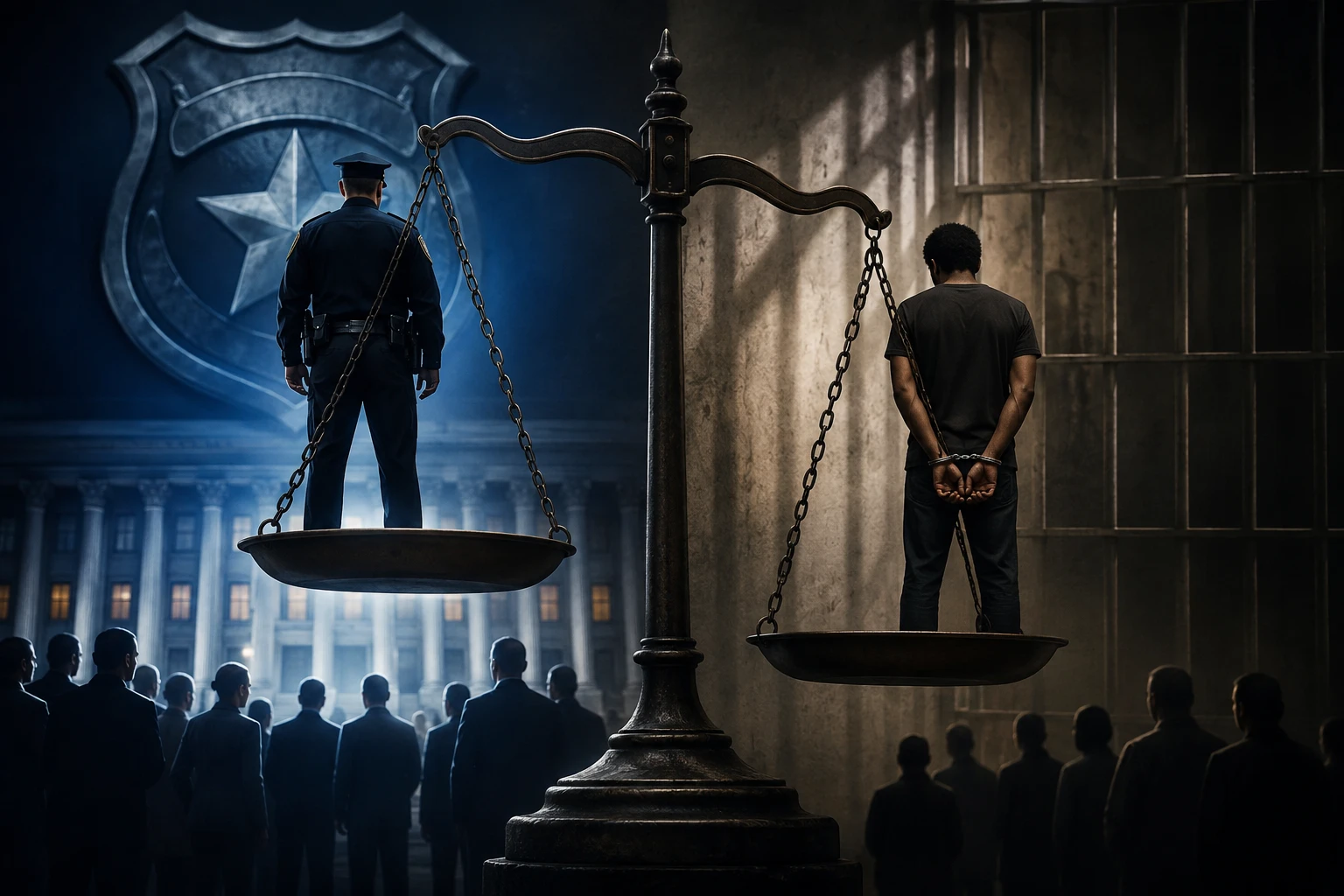
When an officer's actions are recorded clearly and the footage becomes public, government officials are often forced to respond. Investigations are announced. Statements are released. Sometimes officers are suspended, fired, charged, or prosecuted. The public gets to see at least some evidence that the system is taking the incident seriously.
But what happens when there is no video?
What happens when the only person saying an officer acted improperly is an ordinary citizen?
That is where people begin questioning whether the system is truly equal.
A civilian can accuse another civilian of committing a crime, and that accusation can trigger an investigation, questioning, an arrest, criminal charges, court appearances, attorney expenses, bond requirements, and months or even years inside the judicial system.
The accused person may eventually be found innocent, have the charges dismissed, or never be convicted at all. But by then, that person may have already paid an enormous price.
An arrest is not a harmless experience.
There is the physical experience of being placed in handcuffs and transported in a police vehicle. There is the humiliation of being searched, booked, fingerprinted, photographed, and confined. There is the emotional stress of not knowing what will happen next.
There can also be lost wages, missed work, damaged relationships, legal bills, transportation costs, bond expenses, and damage to a person's reputation.
For someone who is innocent, those consequences cannot simply be erased by saying, "The case was dismissed."
That person still lived through it.
At the same time, local governments and justice systems collect money through court costs, fines, fees, bonds, probation-related expenses, vehicle impoundments, and other parts of the criminal legal process. That creates another reason citizens deserve transparency about how the system operates and whether financial incentives are ever being placed ahead of fairness.
Now compare that experience with what can happen when a citizen accuses a police officer of misconduct.
Too often, citizens feel their complaint is immediately viewed with suspicion unless they have a recording, another witness, or overwhelming physical evidence.
That is backwards.
A badge should not automatically make one person's statement more believable than another person's statement.
A police report should not automatically become the unquestionable truth simply because it was written by an officer.
Police officers are human beings. Human beings can make mistakes. Human beings can misunderstand situations. Human beings can become angry. Human beings can lie. Human beings can abuse authority.
Recognizing that reality is not anti-police. It is pro-accountability.
Even cases involving death raise difficult questions about equal treatment. When an officer unlawfully kills someone, the public sometimes sees charging decisions, plea agreements, disciplinary outcomes, or sentences that appear far more lenient than what an ordinary citizen might expect under comparable circumstances.
Every criminal case has different facts and sentencing rules, so comparisons must be made carefully. But the larger principle remains: government employment should never become a shield against equal justice.
The standard should be simple.
The greater the authority, the greater the accountability.
Police officers have powers ordinary citizens do not possess. Because of that, allegations of serious police misconduct should receive meaningful independent review whether a camera was present or not.
Citizens should not have to become their own investigative journalists just to have their allegations taken seriously.
They should not have to pull out a cellphone fast enough.
They should not need a viral video.
They should not need thousands of social-media shares.
And they should not need national television coverage before government officials decide that their complaint deserves attention.
Every legitimate allegation involving excessive force, false arrest, evidence manipulation, unlawful searches, intimidation, retaliation, discriminatory treatment, or abuse of authority deserves an appropriate investigation based on the evidence available.
Independent oversight is especially important because asking a department to investigate its own officers can create an obvious conflict of confidence, even when investigators attempt to act properly.
The public deserves systems where serious complaints can be reviewed outside the officer's immediate chain of command, where body-camera footage and other evidence are preserved, where investigators interview all relevant witnesses, and where complainants can understand what happened to their complaint.
Police officers also deserve a fair process.
An allegation should not automatically equal guilt.
But that same protection should belong to civilians.
An accusation against a civilian should not automatically mean the accused person is guilty either.
Due process cannot be something we demand for government officials while treating ordinary people as disposable defendants.
Equal justice means the rules must work in both directions.
When the government has the power to arrest you, restrain you, prosecute you, take away your freedom, and in certain situations use deadly force against you, the government carries an enormous responsibility to exercise that authority fairly.
Citizens should never feel that the only thing standing between accountability and silence is whether somebody happened to press "record."
Justice should not depend on whether there was a camera.
Justice should depend on the truth.
And if America truly believes that no person is above the law, then that principle must include the people entrusted to enforce it.
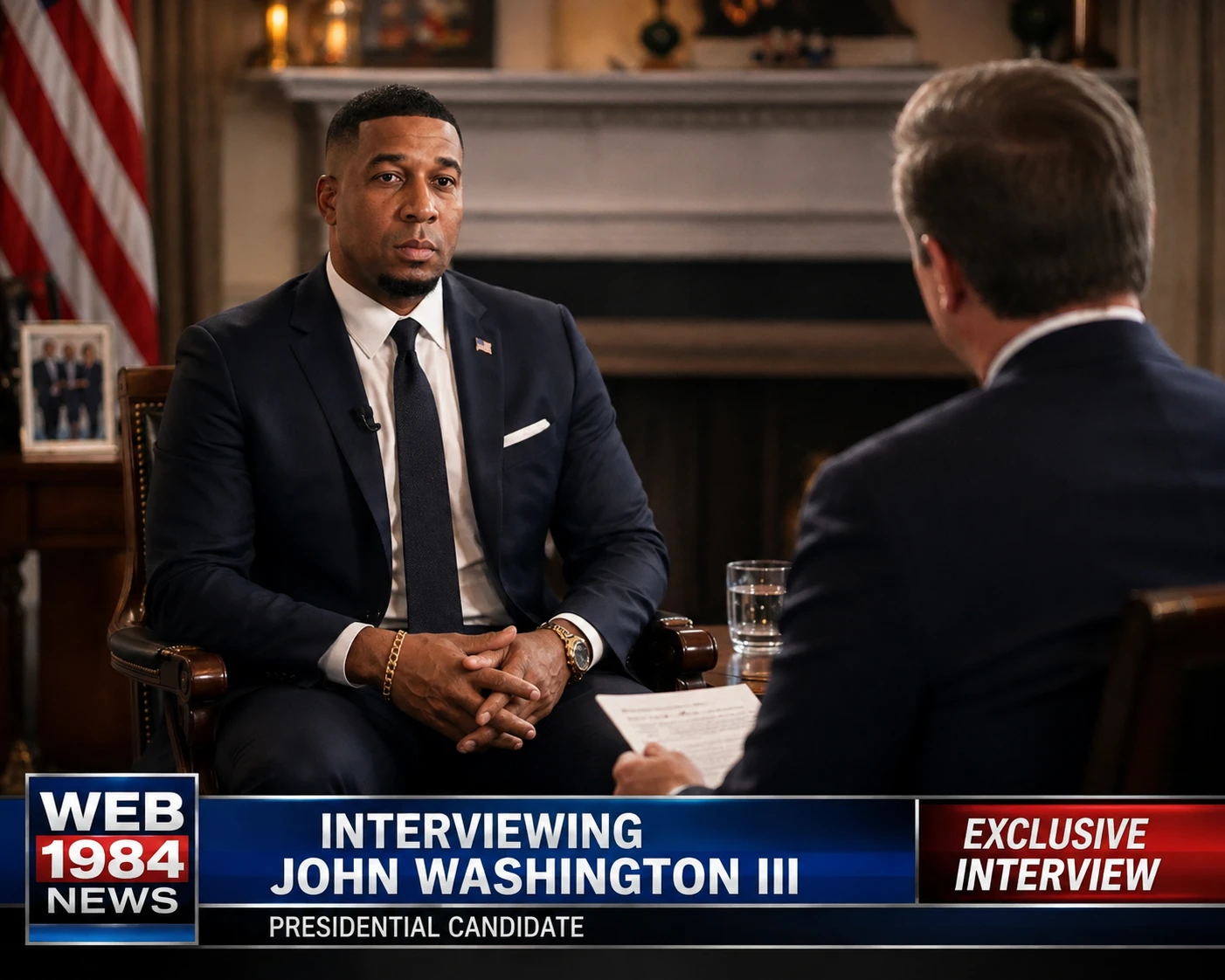
— John Washington III




Be the first person to comment.