
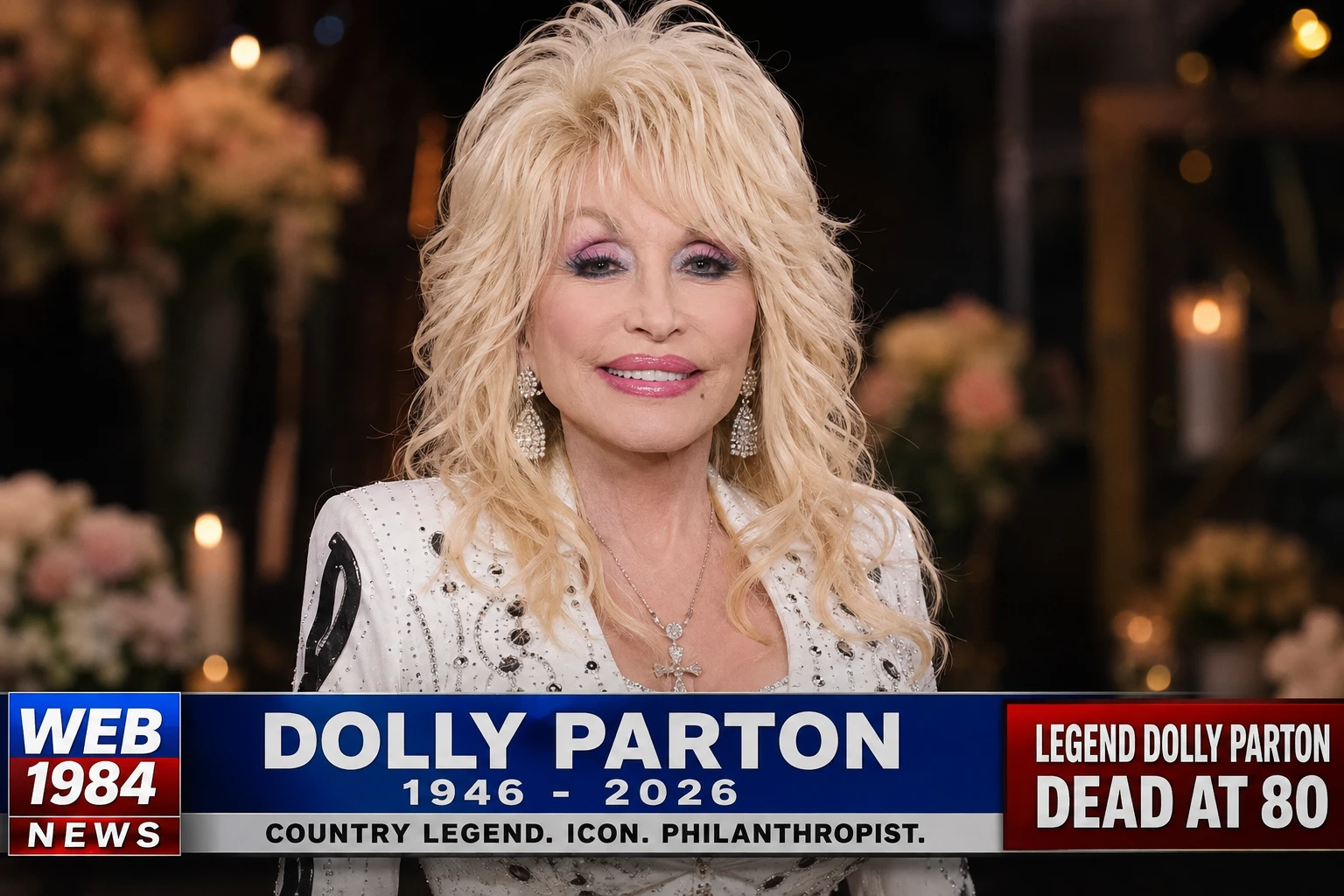
NASHVILLE, Tenn. — Dolly Parton, the legendary singer-songwriter whose career stretched across country music, pop, film, television, business and philanthropy for more than six decades, has died at the age of 80.
Parton’s death was confirmed Tuesday, August 25, by her family. Multiple major news organizations, including The Associated Press and Reuters, have confirmed her passing.
Her death brings to a close one of the most extraordinary careers in American entertainment history. Parton rose from poverty in rural Tennessee to become one of the most recognizable and celebrated entertainers in the world, building a catalog that included classics such as “Jolene,” “Coat of Many Colors,” “9 to 5” and “I Will Always Love You.”
Family Announces Her Death
Parton’s nephew, Bryan Seaver, announced her death on behalf of the family through her social-media accounts. Reports said Parton had been experiencing health problems in the months leading up to her death. At this time, however, an official cause of death has not been publicly announced.
That distinction is important because Parton had recently discussed several health challenges publicly, but neither her family nor her publicist has confirmed that any particular medical condition caused her death.
News of her passing spread rapidly Tuesday afternoon, with tributes beginning to pour in for an entertainer whose influence extended far beyond country music.
Health Problems Had Recently Forced Parton to Step Back
Parton had experienced a difficult period medically before her death.
Earlier this month, she was unable to attend the August 14 opening of a new attraction at Dollywood. She instead recorded a video from her Nashville home, explaining that she had been dealing with dizziness and dehydration and that her doctor had advised her not to travel. She nevertheless told fans she was improving and continuing to work on projects.
Just days before her death, Parton discussed what she described as difficult health problems that she had previously neglected while caring for her husband, Carl Dean.
She said she had been dealing with problems involving her immune and digestive systems and that some medications left her feeling dizzy or “swimmy-headed.” She maintained that doctors considered her conditions treatable and that she was responding to treatment.
Her declining health had already resulted in the cancellation of a planned Las Vegas residency.
The six-show engagement at Caesars Palace was originally scheduled for December 2025 before being postponed to September 2026. In May, Parton canceled the rescheduled shows entirely, explaining that she still needed time to recover.
Even then, she gave little indication that she intended to stop working.
Only days before her death, she spoke publicly about projects she still hoped to complete and remained involved with upcoming entertainment and business ventures.
The Loss of Her Husband Changed the Final Chapter of Her Life
Parton had also been grieving the death of her husband of nearly six decades, Carl Thomas Dean, who died in Nashville on March 3, 2025, at age 82.
Parton and Dean married on May 30, 1966, after meeting two years earlier when Parton was just 18 years old and had recently arrived in Nashville.
Their relationship became one of entertainment’s longest-lasting marriages despite Dean deliberately remaining outside the celebrity spotlight.
After his death, Parton described the enormous love they had shared and later released the song “If You Hadn’t Been There” in his memory.
In subsequent interviews, Parton acknowledged that caring for Dean and grieving his death had taken an emotional and physical toll. She said she had ignored some of her own medical issues while focused on him.
The two had no children together, but Parton frequently spoke about her enormous extended family and became especially well known for her close relationship with her goddaughter, singer Miley Cyrus.
From Tennessee Poverty to International Stardom
Dolly Rebecca Parton was born January 19, 1946, in Tennessee and grew up as one of 12 children in a poor Appalachian family.
Music surrounded her from an early age, particularly through church and her family.
After graduating from high school, Parton moved to Nashville to pursue music professionally. Her major breakthrough came through her appearances alongside Porter Wagoner beginning in the late 1960s.
She eventually established herself independently as one of country music’s most important singer-songwriters.
Parton ultimately achieved 25 No. 1 country hits and sold more than 100 million records worldwide.
But statistics only tell part of the story.
Her songwriting allowed her to move between deeply personal Appalachian stories, traditional country music and mainstream pop.
Few songs demonstrate that reach better than “I Will Always Love You.”
Parton wrote and originally recorded the song herself in the 1970s. Nearly two decades later, Whitney Houston recorded a dramatically different version for the 1992 film The Bodyguard, turning Parton’s composition into one of the biggest-selling singles in music history.
“Jolene” Became One of the World's Most Recognizable Songs
Another signature composition, “Jolene,” became one of country music’s most widely recognized songs.
Parton said the song was partly inspired by a bank teller who appeared particularly interested in her husband.
Over the decades, “Jolene” would be performed and reinterpreted by countless artists and remain part of popular culture more than half a century after its release.
Her ability to write memorable stories about jealousy, poverty, ambition, heartbreak, faith and ordinary working people established Parton as one of America's most significant songwriters.
She Crossed From Country Music Into Hollywood
Parton also accomplished something comparatively rare for country performers of her generation: she became a legitimate Hollywood star.
Her starring role alongside Jane Fonda and Lily Tomlin in the 1980 comedy “9 to 5” introduced her to an even broader audience.
She wrote and performed the film's title song, which became another of her signature recordings.
Parton later appeared in movies including “Steel Magnolias,” “The Best Little Whorehouse in Texas” and other film and television projects.
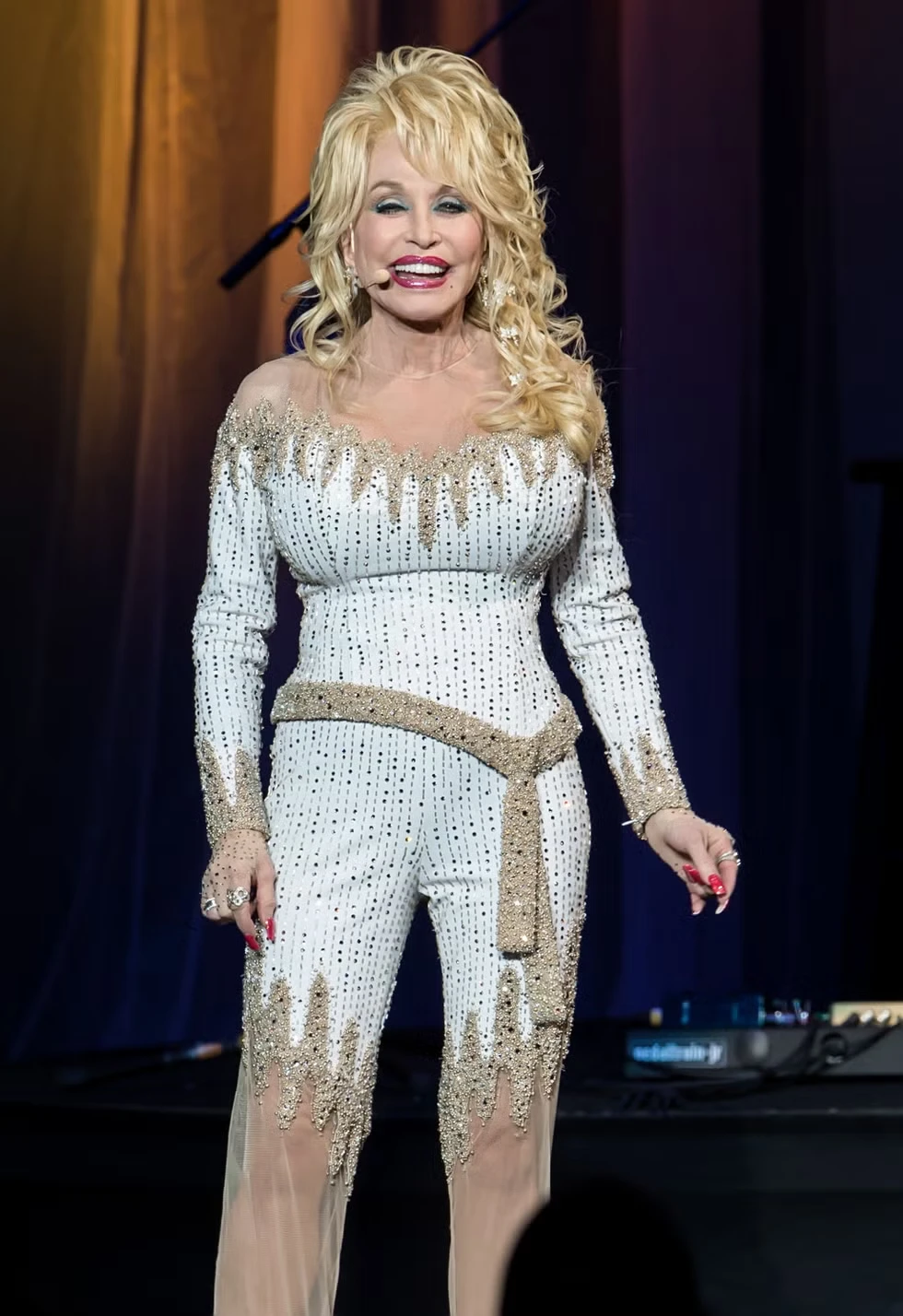
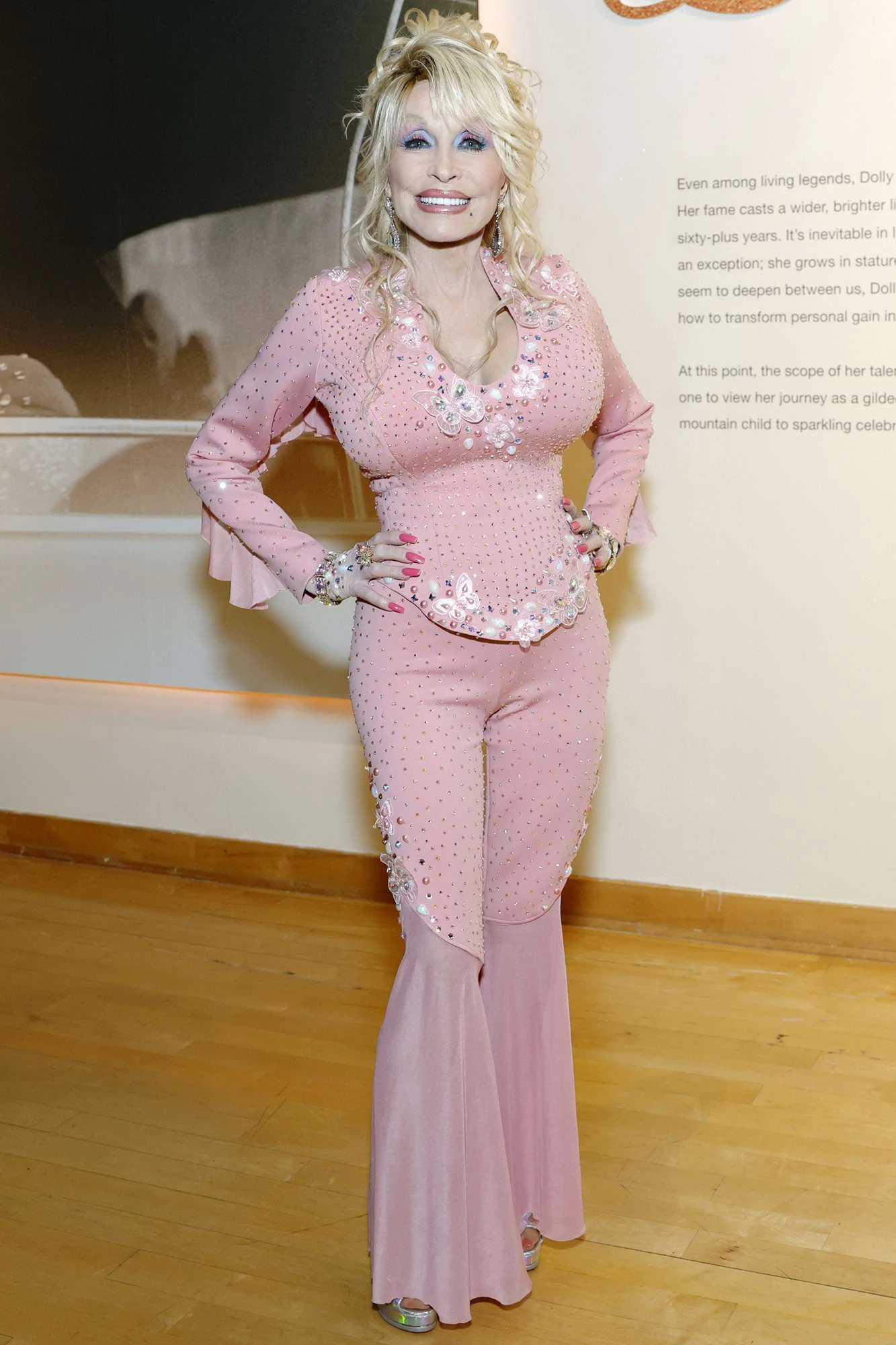
Her distinctive Tennessee accent, humor, elaborate hairstyles, rhinestone-heavy fashion and self-deprecating personality helped transform her into a cultural figure recognizable even to people who never regularly listened to country music.
Dollywood Turned Her Into a Major Businesswoman
Parton was also a highly successful entrepreneur.
In 1986, she became associated with the Tennessee theme park that would become Dollywood, located near the Great Smoky Mountains.
The resort grew into one of Tennessee's best-known tourist attractions and became a significant employer and economic force in the region where Parton grew up.
She expanded the Dolly brand into entertainment productions, hotels, resorts, merchandise and numerous other ventures while retaining unusually strong control over her intellectual property and career.
That business independence became an important part of her legacy.
Her Philanthropy May Be Remembered Alongside Her Music
Parton's charitable work became nearly as famous as her entertainment career.
In 1995, she launched Dolly Parton's Imagination Library, originally created to provide books to young children in her home county in Tennessee.
The program eventually expanded across the United States and internationally, distributing hundreds of millions of books to children.
Parton also funded scholarships, assisted families affected by devastating Tennessee wildfires and contributed $1 million toward research connected with the Moderna COVID-19 vaccine.
Her philanthropic philosophy often centered on helping children and communities similar to the one in which she had grown up.
Awards Across Generations
Parton's career produced a massive collection of honors.
She won numerous Grammy Awards, received a Grammy Lifetime Achievement Award, earned membership in the Country Music Hall of Fame, and was inducted into the Rock & Roll Hall of Fame in 2022.
She also received a Kennedy Center Honor and the National Medal of Arts.
Remarkably, Parton's relevance continued across generations.
Artists who came decades after her regularly cited her as an influence, and her music continued to be recorded by younger performers.
She Never Fully Stopped Working
Even as health problems intensified, Parton continued developing projects.
She had been working on the autobiographical stage production “Dolly: A True Original Musical,” as well as new attractions and developments associated with her businesses.
Reports published immediately before her death described Parton as still thinking about future performances and even technological possibilities that could preserve versions of her stage performances for future generations.
That makes the timing of Tuesday's announcement particularly striking.
Parton was not publicly presenting herself as someone preparing to disappear from public life.
She was still talking about work, creativity and projects she hoped to finish.
An American Cultural Institution
Dolly Parton's appeal was unusual because it crossed boundaries that divide many entertainers.
Country fans considered her one of their genre's foundational figures.
Pop audiences knew her songs.
Movie audiences knew her performances.
Families knew Dollywood.
Millions of parents and children knew the Imagination Library.
Songwriters respected her publishing catalog.
And generations of entertainers admired her ability to remain unmistakably herself while navigating more than six decades of a constantly changing entertainment industry.
She could present an intentionally exaggerated glamorous image while simultaneously making jokes about it, and she rarely appeared uncomfortable with the contradictions surrounding fame.
Beneath that image was an unusually prolific songwriter, disciplined businesswoman and entertainer who understood the value of owning and protecting her work.
Cause of Death Remains Undisclosed
As of Tuesday afternoon, Parton's family has not announced an official cause of death.
Although she had recently discussed dehydration, dizziness, immune-system concerns, digestive problems and medication-related side effects, it would be premature to identify any of those conditions as the cause of her death without confirmation from her family or representatives.
Additional information regarding memorial arrangements and services had also not yet been publicly released.
The story remains developing.
What is already certain, however, is the scale of what Dolly Parton leaves behind: thousands of songs and recordings, film performances, businesses, charitable institutions and an artistic influence that touched several generations.
From a poor childhood in the mountains of Tennessee to becoming one of the most recognizable women in the world, Dolly Parton's life became its own distinctly American story.
She was 80 years old.




Be the first person to comment.