
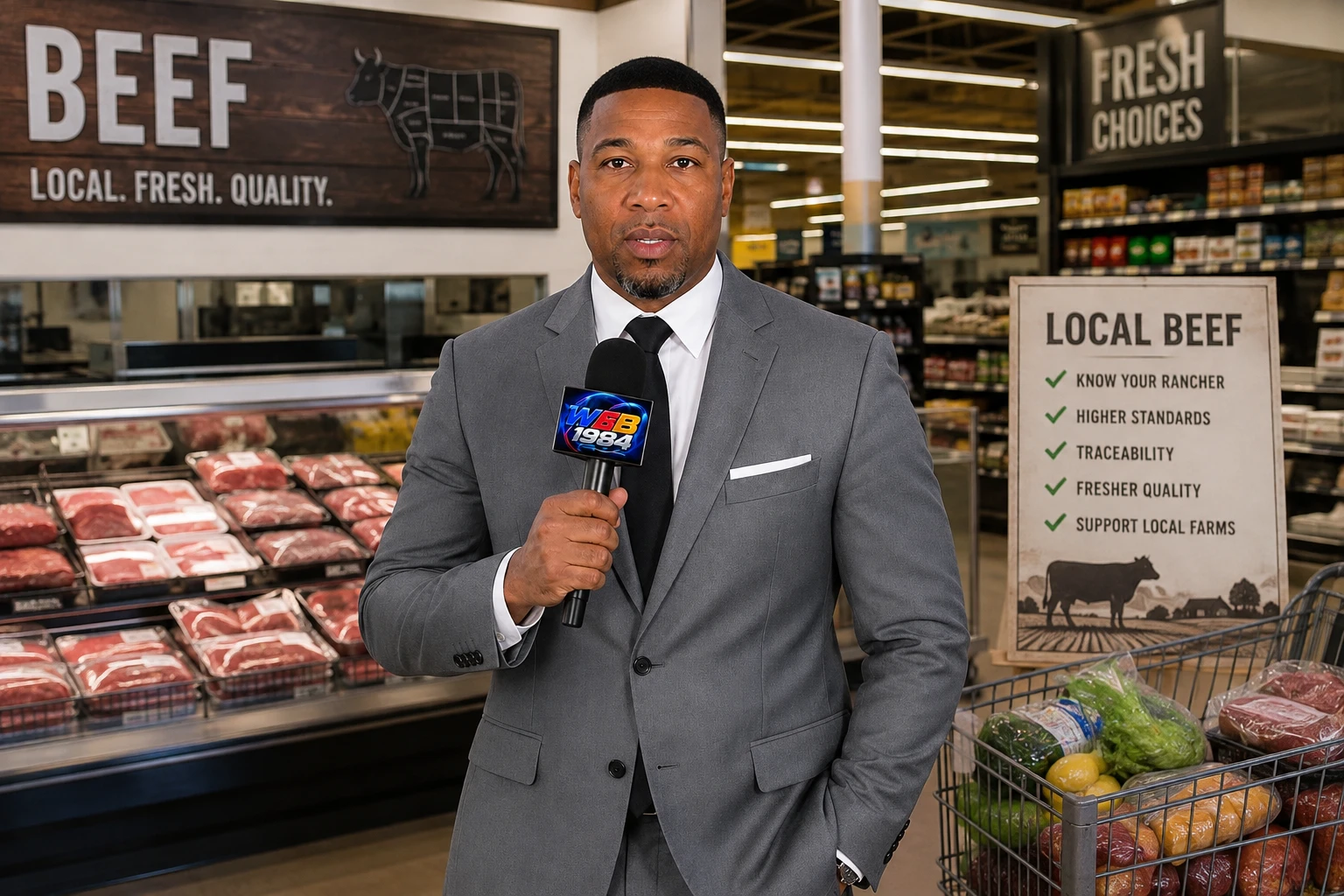
A wave of food recalls affecting products sold in Texas is causing some families to look more closely at where their food comes from, with locally raised beef emerging as an alternative for consumers who want greater traceability and are willing to purchase meat in bulk.
The conversation is not simply about whether local beef is “better” than supermarket beef. It involves food safety, government inspection, freezer space, upfront cost, cooking practices and how much information consumers can obtain about the animal and processor before buying.
In the Houston area, some shoppers are considering buying a quarter, half or even an entire steer rather than purchasing individual packages of ground beef, steaks and roasts week after week.
A Fulshear-area cattle producer interviewed for a local report said interest in bulk beef purchases has increased as families pay closer attention to recalls and the origins of the food they purchase. His operation raises Black Angus cattle in Texas and sells beef directly to customers.
Buying a Cow Is a Much Different Purchase
Purchasing beef directly from a cattle producer can require a substantial payment upfront.
One Texas operation cited prices of roughly $1,800 to $1,990 for a quarter steer, approximately $3,035 to $3,240 for a half steer, and more than $6,000 for an entire steer, depending on the animal's weight.
Those figures should not automatically be compared with the sticker price of a package of ground beef.
Bulk beef is commonly priced using hanging weight, which is the weight of the carcass after slaughter and initial processing but before trimming, deboning and packaging. The amount of meat that ultimately reaches a customer's freezer will therefore be lower than the hanging weight.
That means consumers considering a bulk purchase should determine exactly what they are paying for, how much packaged meat they should expect to receive and whether slaughter, processing and packaging charges are already included.
For a family that eats beef several times each week, buying in bulk may potentially reduce the average cost of premium cuts over time. But the savings vary significantly according to the cuts a household normally purchases and how much meat is actually consumed.
A comparison of grocery prices cited in the Houston-area report estimated that a family of five serving beef around four times each week could spend roughly $325 to $430 per month, or approximately $3,900 to $5,200 annually, depending on the cuts and grocery prices.
But those numbers are an illustration, not a guarantee that every family will save money by buying local beef.
Local Does Not Automatically Mean Safer
One of the most important distinctions for consumers is that locally raised meat is not automatically immune from contamination.
Cattle can carry harmful organisms, and contamination can occur during slaughter, processing, grinding, packaging, transportation or food preparation.
Ground beef deserves particular attention because bacteria originally present on the surface of meat can be distributed throughout the product during grinding.
The USDA's Food Safety and Inspection Service warns that raw beef can contain pathogens including Salmonella and Shiga toxin-producing E. coli. Because those organisms cannot reliably be detected by sight or smell, safe handling and proper cooking remain necessary regardless of whether the beef was purchased from a supermarket or directly from a rancher.
For consumers, the USDA recommends cooking ground beef to an internal temperature of 160 degrees Fahrenheit, measured with a food thermometer. Color alone is not a reliable test because a properly cooked hamburger may still appear pink, while an undercooked burger may sometimes appear brown.
Inspection Still Matters When Buying Locally
Texas consumers purchasing meat directly from a producer should also understand the inspection system.
The Texas Department of State Health Services says meat sold to the public must originate from an approved source. A state or federal inspection mark is evidence that the product came through an inspected system.
Texas also allows certain custom-exempt processing arrangements. In those situations, an animal belongs to the customer and is processed for that owner's personal household use. Meat produced under the custom exemption must be marked “Not for Sale.”
For shoppers considering a large local beef purchase, that makes the processing arrangement an important question.
Consumers should know who owns the animal at the time of slaughter, which facility performs the processing and whether that operation is federally inspected, Texas inspected or operating under a lawful custom exemption.
Recent Beef Recall Adds to Concerns
The renewed interest in local meat comes as shoppers have encountered several significant recalls involving foods distributed in or connected to Texas.
One recent recall involved approximately 29,628 pounds of raw beef imported from Argentina by Corte Argentino USA LLC.
According to the report, the USDA Food Safety and Inspection Service said the meat entered the United States without undergoing the required import reinspection. Importantly, the recall was based on an inspection violation; authorities did not announce that the beef had been confirmed contaminated with E. coli, Salmonella or another pathogen.
That distinction matters because not every food recall means someone became sick or laboratory testing confirmed contamination.
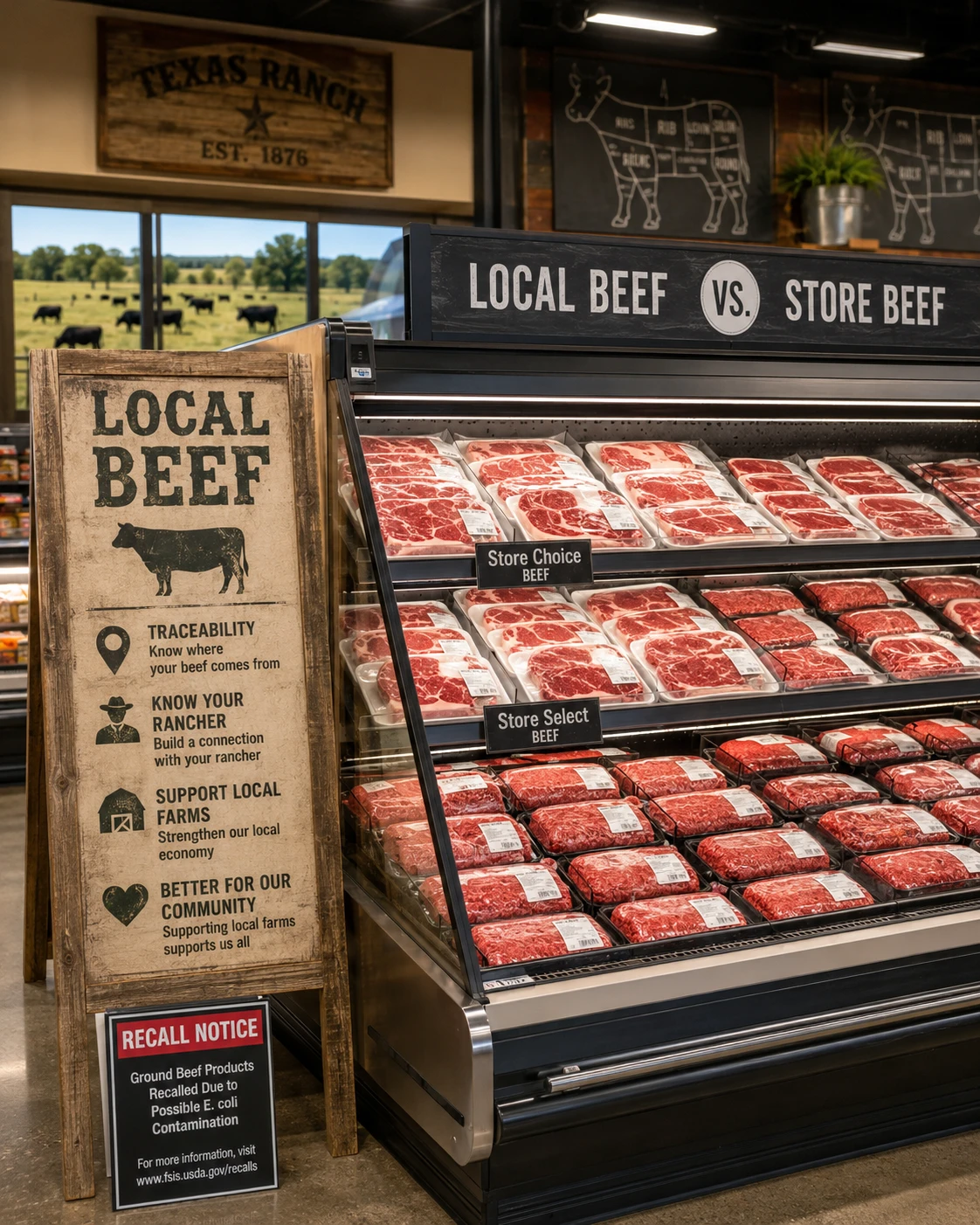
Recalls can also occur because products were improperly labeled, contained undeclared allergens, bypassed required inspections or were produced under conditions that regulators determine could create a safety risk.
Nearly 1.6 Million Dozen Eggs Recalled
Beef is only one part of the recent food-safety discussion.
On July 22, Midwest Poultry Services announced the recall of 1,589,577 dozen eggs produced in Texas because of potential Salmonella Enteritidis contamination.
The recall covered both white shell eggs and brown cage-free shell eggs.
Salmonella can cause diarrhea, fever and abdominal cramps and can result in more serious illness among young children, older adults and people with weakened immune systems.
Massive Cyclospora Outbreak Linked to Iceberg Lettuce
The scope of another ongoing foodborne-illness investigation has grown significantly.
The FDA announced on August 20 that a multistate Cyclospora outbreak associated with iceberg lettuce sourced from central Mexico had reached 10,930 reported illnesses in 17 states, with 454 hospitalizations and two deaths.
Taylor Farms de Mexico voluntarily removed iceberg lettuce sourced from central Mexico from the U.S. market in July. The FDA says recalled product was distributed to numerous states, including Texas, although Texas was not listed among the 17 states reporting outbreak cases in the agency's August 20 count.
Cyclospora is a microscopic parasite that can cause prolonged intestinal illness, including frequent diarrhea, stomach cramps, nausea, fatigue, loss of appetite and weight loss.
The FDA says recalled lettuce associated with this particular outbreak should no longer be available in stores or restaurants, but the investigation remains active.
Jalapeño Salmonella Outbreak Reaches Hundreds
Federal health officials are also investigating a separate Salmonella outbreak connected to fresh jalapeño peppers from Sinaloa, Mexico, distributed by Coast Citrus Distributors.
As of August 19, the FDA reported 431 confirmed illnesses across 32 states, including 57 hospitalizations and no reported deaths.
Officials said 203 of 224 sick people who were interviewed reported eating at a Mexican-style restaurant before becoming ill.
The investigation triggered downstream recalls because the jalapeños were incorporated into prepared foods.
Products containing affected peppers were distributed through retailers including Kroger, Target, Trader Joe's, Walmart, Whole Foods and others. Additional recalled products included certain H-E-B and NatureBest items distributed in Texas and Louisiana.
The recalls demonstrate how a single contaminated ingredient can spread through a complicated national food-supply chain and end up in multiple finished products under different brands.
Why Some Consumers Prefer Knowing the Rancher
That complexity is one reason direct-to-consumer beef attracts some families.
Purchasing directly from a rancher can give a consumer an opportunity to ask questions that may be difficult to answer from a supermarket package alone.
A buyer may be able to determine exactly where the animal was raised, what it was fed, which processor handled it, whether the beef came from one animal and how quickly it moved from processing into frozen storage.
That increased traceability can be valuable.
But traceability should not be confused with a guarantee against contamination.
Small farms and processors still have to follow proper sanitation, refrigeration and processing practices. Consumers must also protect the meat after taking possession of it.
Questions to Ask Before Buying a Quarter or Half Steer
Families considering bulk beef should determine where the animal was raised and processed, whether the processor is state or federally inspected, what weight is being used to calculate the price and how many pounds of finished meat they should expect.
They should also ask whether butcher and processing fees are included, whether they can choose their cuts, how the meat will be packaged, how recalls would be handled and whether the beef can be traced to a particular animal or processing lot.
Freezer capacity is another major consideration.
A bulk purchase can represent months of food, meaning a freezer failure or prolonged power outage could result in a substantial financial loss if the meat cannot be kept safely frozen.
Safe Handling Continues at Home
Regardless of where beef is purchased, food safety continues after it enters the kitchen.
USDA guidance calls for raw ground beef to be refrigerated at 40 degrees Fahrenheit or below and generally used within one to two days or frozen for longer storage. Raw meat should remain separated from foods that will be eaten without cooking.
Hands, cutting boards, utensils and countertops that contact raw meat should be thoroughly cleaned to prevent cross-contamination.
Consumers also should not depend on smell to determine whether harmful bacteria are present.
Food that looks and smells normal can still contain pathogens.
Local Versus Supermarket Beef Is Not a Simple Contest
For families trying to decide between locally raised beef and supermarket beef, there is no single answer that applies to everyone.
Large grocery chains offer convenience, individual portions, frequent sales and a highly developed distribution system.
Direct ranch purchases can offer greater knowledge about the animal, more control over cuts and the ability to purchase a long-term supply at once.
Neither method eliminates food-safety risk.
The most important factors are whether the meat was legally and properly processed, whether the seller can provide clear information about its origin and whether consumers maintain safe storage and cooking practices once the beef reaches home.
The recent recalls are serving as a reminder that today's food supply is highly interconnected. For some Texas families, that is enough to make knowing the farmer, rancher or processor behind their food increasingly important.
WEB 1984 News will continue monitoring federal food-safety investigations and recalls affecting consumers in Texas and across the United States.






Be the first person to comment.