
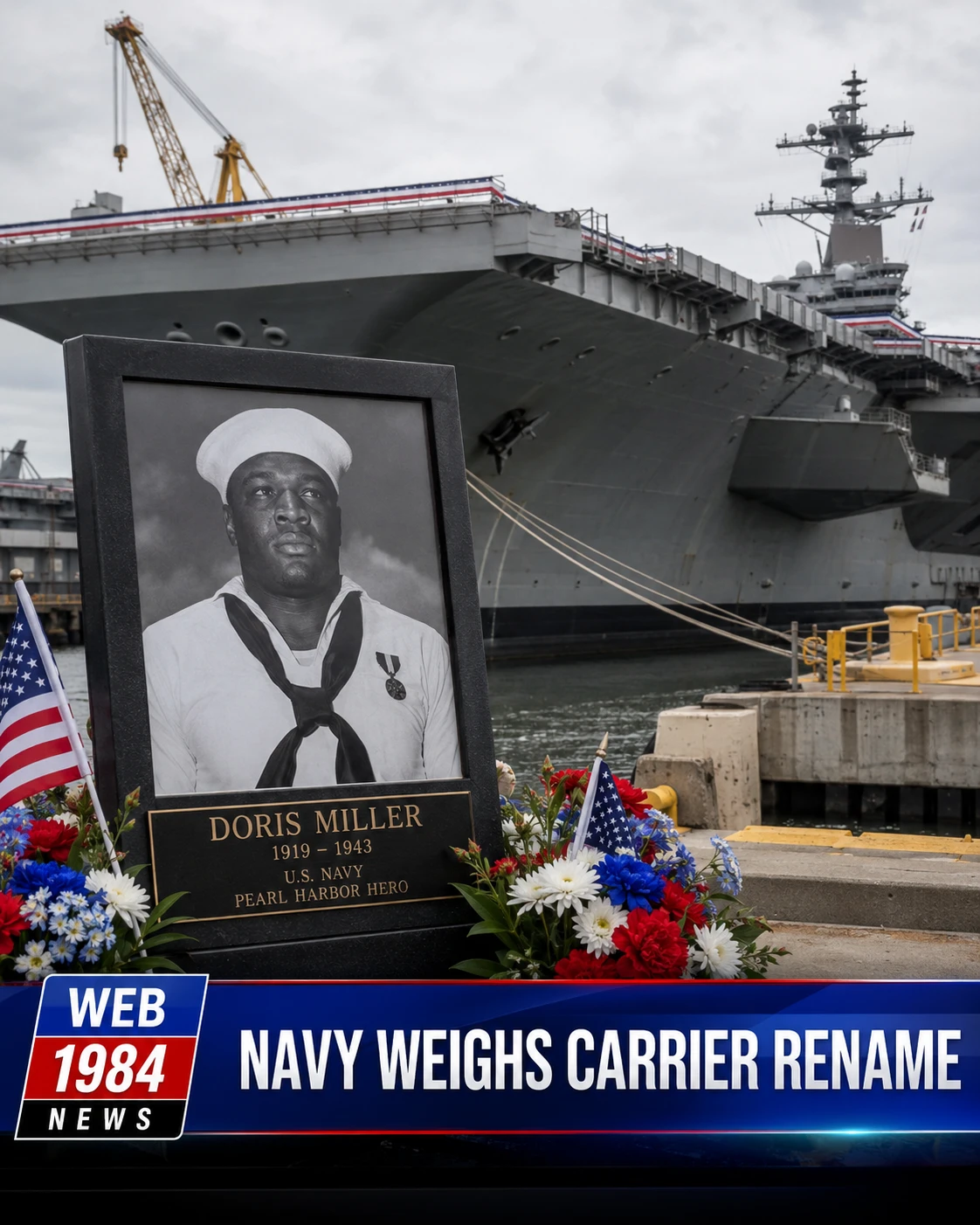
WASHINGTON — The U.S. Navy is reportedly considering changing the name of a future nuclear-powered aircraft carrier that was intended to honor Doris “Dorie” Miller, the Black Navy sailor celebrated for extraordinary bravery during the Japanese attack on Pearl Harbor, with President Donald Trump’s name emerging as one possible replacement.
CNN reported Thursday that three sources familiar with internal Navy discussions said officials are working through the possibility of renaming the Ford-class carrier currently designated CVN-81, which has for years been planned as the USS Doris Miller. The discussions have not yet resulted in a publicly announced final decision, meaning the Doris Miller name remains associated with the ship for now.
The potential change would carry historical and political significance because the USS Doris Miller was set to become the first U.S. aircraft carrier named for an African American and the first carrier named in honor of an enlisted sailor specifically recognized for combat heroism. The Navy formally announced Miller’s selection in January 2020 during a Martin Luther King Jr. Day ceremony at Pearl Harbor.
Who Was Doris Miller?
Doris Miller was serving aboard the battleship USS West Virginia when Japanese forces attacked Pearl Harbor on December 7, 1941.
Miller, who had been assigned as a mess attendant in a segregated Navy, helped move wounded sailors to safety during the attack. He then manned an anti-aircraft weapon despite not having received formal training on the gun and fired at attacking Japanese aircraft.
His actions transformed Miller into one of the most prominent Black military heroes of World War II.
In 1942, Miller received the Navy Cross, then the Navy's second-highest decoration for valor. Congressional Research Service records describe him as an African American enlisted sailor awarded the Navy Cross for his actions during Pearl Harbor.
Miller later served aboard the escort carrier USS Liscome Bay. He was killed in November 1943 when the ship was struck by a Japanese submarine torpedo during operations in the Pacific.
For generations, his story has represented both battlefield courage and the service of Black Americans during an era when the U.S. armed forces remained segregated.
A Historic Carrier Already Under Construction
CVN-81 is the fourth ship of the Navy's Gerald R. Ford class of nuclear-powered aircraft carriers and is being constructed by Huntington Ingalls Industries at Newport News Shipbuilding in Virginia.
The Navy had previously projected delivery in February 2032, but updated budget documents pushed that date back two years to February 2034, citing construction constraints affecting the shipyard's ability to build modules for the vessel.
The possible name change arrives at a particularly unusual moment because the vessel is already far into the planning and construction process.
It also follows another major Trump administration decision directly affecting the carrier.
Trump Has Already Ordered Major Changes to the Carrier
On August 13, President Trump directed the Pentagon to prepare a plan to abandon the electromagnetic aircraft-launch technology planned for future Ford-class carriers beginning with CVN-81.
Instead, Trump wants the Navy to return to traditional steam-powered catapults and hydraulic systems similar to those used aboard older Nimitz-class carriers.
The Electromagnetic Aircraft Launch System, commonly called EMALS, uses electrical power and magnetic forces to accelerate aircraft off the carrier's deck. The Navy developed the system partly to reduce maintenance and manpower while allowing greater control over launches involving different aircraft types.
Trump has criticized electromagnetic catapults for years and has repeatedly argued that steam systems are simpler and more reliable.
The administration says the broader naval initiative is intended to address long-term shipbuilding problems, increase industrial capacity and emphasize proven technologies.
But military analysts and manufacturers have warned that redesigning the Doris Miller at this stage could dramatically increase costs.
General Atomics, which produces EMALS equipment, said work associated with the ship's launch and arresting systems was already approximately halfway complete and warned that changing direction could introduce substantial cost, scheduling and integration risks.
Some experts estimate the redesign could cost billions of dollars and potentially push the carrier's deployment beyond its already delayed 2034 timetable.
Renaming the Carrier Would Open Another Debate
The discussion over the ship's name is separate from the engineering debate, but it could become even more politically explosive.
Naming a carrier after Miller was widely considered a major recognition of an enlisted Black sailor whose heroism occurred despite the racial barriers of his time.
Aircraft carriers frequently carry names connected to presidents and major American political or military figures, but Miller's selection broke from that tradition.
Changing the name to honor Trump would therefore remove one of the Navy's most prominent planned tributes to an enlisted service member and transfer the distinction to a sitting president.
Supporters of naming military assets after presidents may argue that presidents serving as commander in chief occupy an important place in American military history and that ship names have changed throughout the Navy's history.
Critics, however, are likely to question why an already announced honor for Miller should be removed rather than reserving Trump's name for a different future vessel.
Can the Navy Change the Name?
The Navy does have authority over the naming of its ships, traditionally exercised through the secretary of the Navy under applicable law and departmental policy.
Ship names are not necessarily permanent before or even after commissioning. The Navy has renamed vessels before, although changing the identity of a high-profile nuclear carrier already under construction would attract substantial scrutiny from lawmakers, veterans, military historians and the public.
Congress can also become involved through legislation, appropriations and oversight.
That means even if senior Navy or administration officials decide they want CVN-81 renamed, the controversy may continue well beyond the initial decision.
No Final Decision Announced
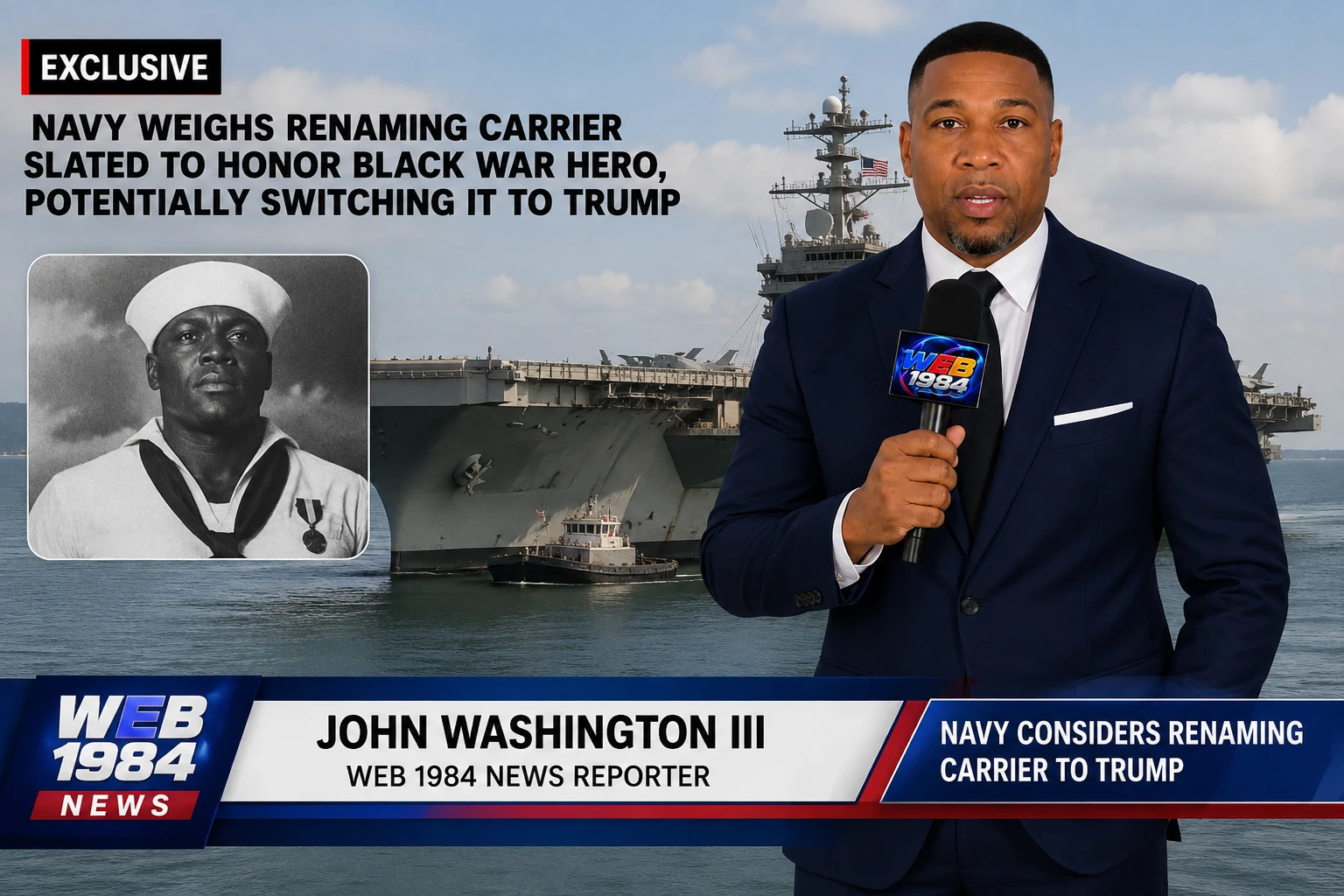
The most important distinction at this stage is that reports describe internal discussions, not a completed renaming.
There has been no publicly announced order declaring that CVN-81 will officially become the USS Donald J. Trump, and the Navy's previous public designation remains USS Doris Miller unless and until the government formally changes it.
The developing situation therefore involves two separate realities: the Navy is reportedly examining alternatives to the Doris Miller name, and Trump's name has surfaced as one possibility, but the outcome remains unsettled.
More Than Just the Name on a Ship
Whatever happens next, the controversy reaches far beyond the lettering painted on the stern of an aircraft carrier.
For Miller's supporters, the carrier represents recognition that America's military history includes enlisted sailors and Black service members whose sacrifices were historically overlooked.
For the Trump administration and Navy leadership, the dispute also intersects with a broader effort to reshape the future carrier fleet, including its technology, design and shipbuilding strategy.
CVN-81 is expected to serve for roughly half a century once completed. The name ultimately placed on the carrier could therefore remain visible throughout much of the 21st century.
That makes the current debate not only a question about Donald Trump or Doris Miller, but about who the United States chooses to memorialize through some of the most powerful and recognizable vessels in the American military.
WEB 1984 News will continue following the Navy's deliberations and any official announcement concerning the future name of CVN-81.




Be the first person to comment.