
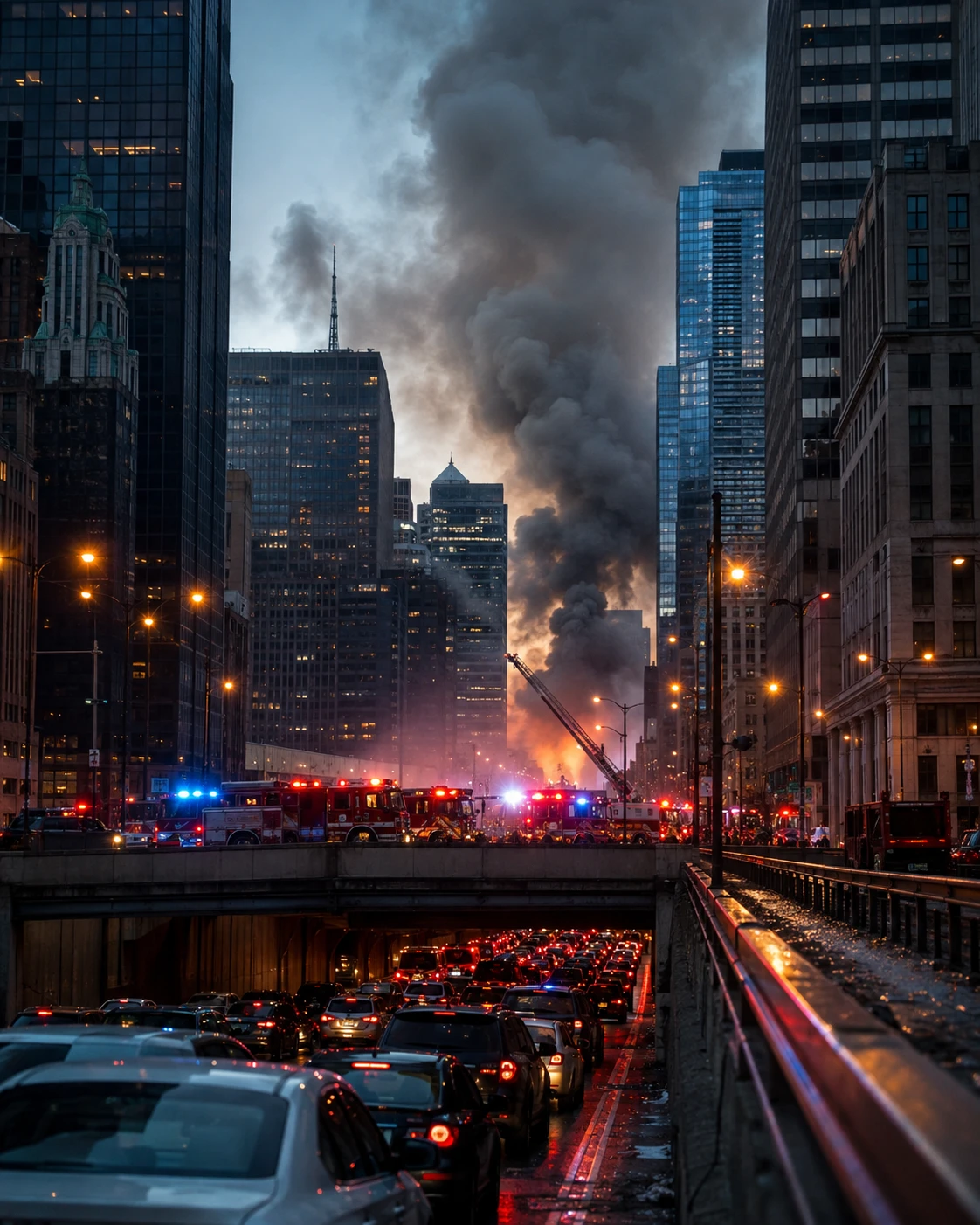
An NBC Chicago producer who was nearby reported hearing a loud boom shortly before the smoke appeared. At the time of the report, authorities had not publicly established whether that boom was connected to whatever produced the smoke.
That distinction is important.
As a reporter, I'm not going to tell people an explosion occurred when officials have not confirmed an explosion. I'm not going to invent a cause, and I'm not going to turn unanswered questions into facts.
But I am going to ask the questions.
What Happened in Downtown Chicago?
When people hear a loud boom, see smoke pouring into the air and then watch a major emergency response arrive, they deserve an explanation.
What produced the smoke?
What produced the boom?
Were the two connected?
Did the incident originate above ground or below street level?
Was a utility system involved?
Was there a fire?
Was there an equipment malfunction?
Was there any danger to people inside nearby buildings?
And most importantly: Was the public ever in immediate danger?
As of the information publicly available from the initial NBC Chicago report, those questions had not been answered. NBC reported that no additional information about the cause was immediately available.
That means we should not speculate—but we also should not stop asking.
Lower Wacker Makes This Especially Interesting
Anybody familiar with downtown Chicago knows that what you see at street level is not the entire city.
Chicago has an extensive network of lower-level streets, tunnels, utility infrastructure, pedestrian systems and underground facilities beneath portions of downtown.
Lower Wacker Drive itself runs beneath the upper roadway through the heart of the city.
So when smoke appears around this area and emergency vehicles begin moving through Lower Wacker, people naturally want to know exactly where the incident originated.
That does not mean this event involved some secret government facility.
There is currently no evidence in the report establishing anything like that.
But government agencies should understand why people ask questions when something dramatic happens in an area containing complicated underground infrastructure.
The easiest way to stop misinformation is simple:
Give the public accurate information.
People Were Sitting in Traffic While Emergency Crews Responded
One of the videos described by NBC Chicago showed drivers stuck on Lower Wacker as firefighters and other officials responded.
Think about that situation from the public's perspective.
You are underground or below the main street level.
Traffic stops.
Emergency vehicles begin appearing.
Then you see or smell smoke.
Maybe you heard a boom.
And you don't know what's happening.
That can become dangerous very quickly if people panic.
It also raises emergency-management questions.
How quickly can people be evacuated from Lower Wacker during a major emergency?
What happens if smoke makes visibility impossible?
What happens if multiple exits become blocked?
How are motorists notified about what is happening?
Those are questions that should be examined even if this particular incident ultimately turns out to have been minor.
I Want Facts, Not Conspiracies
I've been speaking publicly about government infrastructure, underground facilities and the need for greater transparency.
But there is a difference between asking questions and making accusations without evidence.
This Chicago incident is a good example.
We know smoke appeared.
We know emergency responders arrived.
We know traffic was affected.
We know a witness reported hearing a loud boom before the smoke.
We do not yet know from the initial reporting exactly what caused it.
That's where responsible reporting should stop until additional evidence becomes available.
But responsible reporting doesn't mean being silent.
It means saying:
“We don't know yet. Now let's find out.”
Chicago Officials Should Explain What Happened
I believe Chicago officials and the agencies involved should provide the public with a clear account once the facts are established.
Tell people:
What happened.
Where it started.
What caused the smoke.
Whether there was actually an explosion.
Whether underground infrastructure was involved.
Whether anybody was injured or placed in danger.
Whether buildings were evacuated.
Whether environmental or air-quality concerns existed.
And whether anything needs to be repaired or investigated to prevent it from happening again.
That's not attacking government.
That's called accountability.
This Is Why Independent Reporting Matters
Too many stories disappear from public attention after the dramatic video stops circulating.
Everybody watches the smoke.
Everybody watches the emergency vehicles.
Everybody asks questions for a few hours.
Then another story comes along and everybody forgets.
I don't want us doing that anymore.
When government agencies respond to something unusual, reporters should continue asking questions until the public understands what occurred.
That's what journalism is supposed to do.
We don't need to scare people.
We don't need to create conspiracy theories.
And we certainly don't need to accuse people without evidence.
But we also shouldn't accept “nothing to see here” when legitimate questions remain unanswered.
A loud boom was reportedly heard.
Smoke filled part of downtown Chicago.
Visibility dropped.
Firefighters and emergency personnel responded.
Traffic backed up on Lower Wacker Drive.
Now I want to know what caused it.
And I believe the people of Chicago deserve to know too.
I'll keep watching this story. If officials release additional verified information, that's the information the public should see—not rumors, not guesses, and not somebody's theory online.
— John Washington III Reporter | Candidate for President of the United States, 2028





Be the first person to comment.