
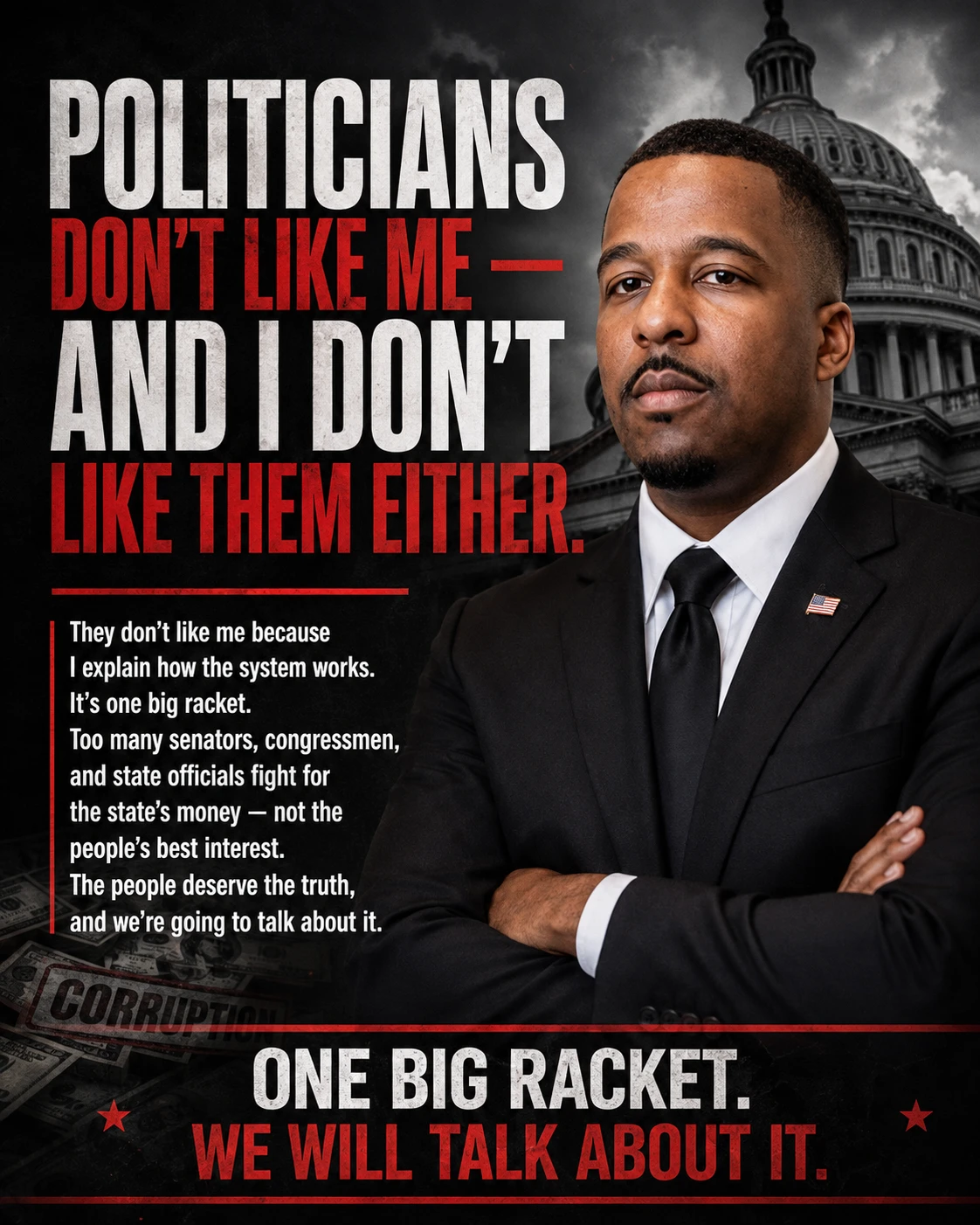
Looking at Government From the State Level Up
Washington says Americans frequently interact with government without being shown where their money goes, how different agencies receive funding, or how decisions made by local and state governments connect to larger political and financial systems.
Taxes, court costs, traffic fines, government fees, property taxes, licensing requirements and other sources of public revenue can involve several agencies and levels of government.
Washington wants voters to examine those systems more closely.
His position is not simply that government collects money. Governments obviously require revenue to operate public services. His larger question is whether those systems are always designed and administered in the best interest of the citizens who finance them.
Washington says that is the conversation politicians often avoid.
Rather than asking voters to accept government policies simply because they have existed for decades, he wants Americans asking more questions:
Who benefits from a particular law?
Where does the money go?
Which government agency receives it?
Who approved the system?
Does the policy actually protect citizens?
Could the same public objective be accomplished without placing unnecessary financial pressure on ordinary people?
Those questions form the foundation of what Washington describes as exposing how “the system works.”
Challenging More Than One Political Party
Washington’s criticism is not limited to Republicans or Democrats.
His message is aimed at what he considers a broader political establishment consisting of lawmakers, bureaucracies and government institutions that can become disconnected from the people they serve.
That distinction is important to his political identity.
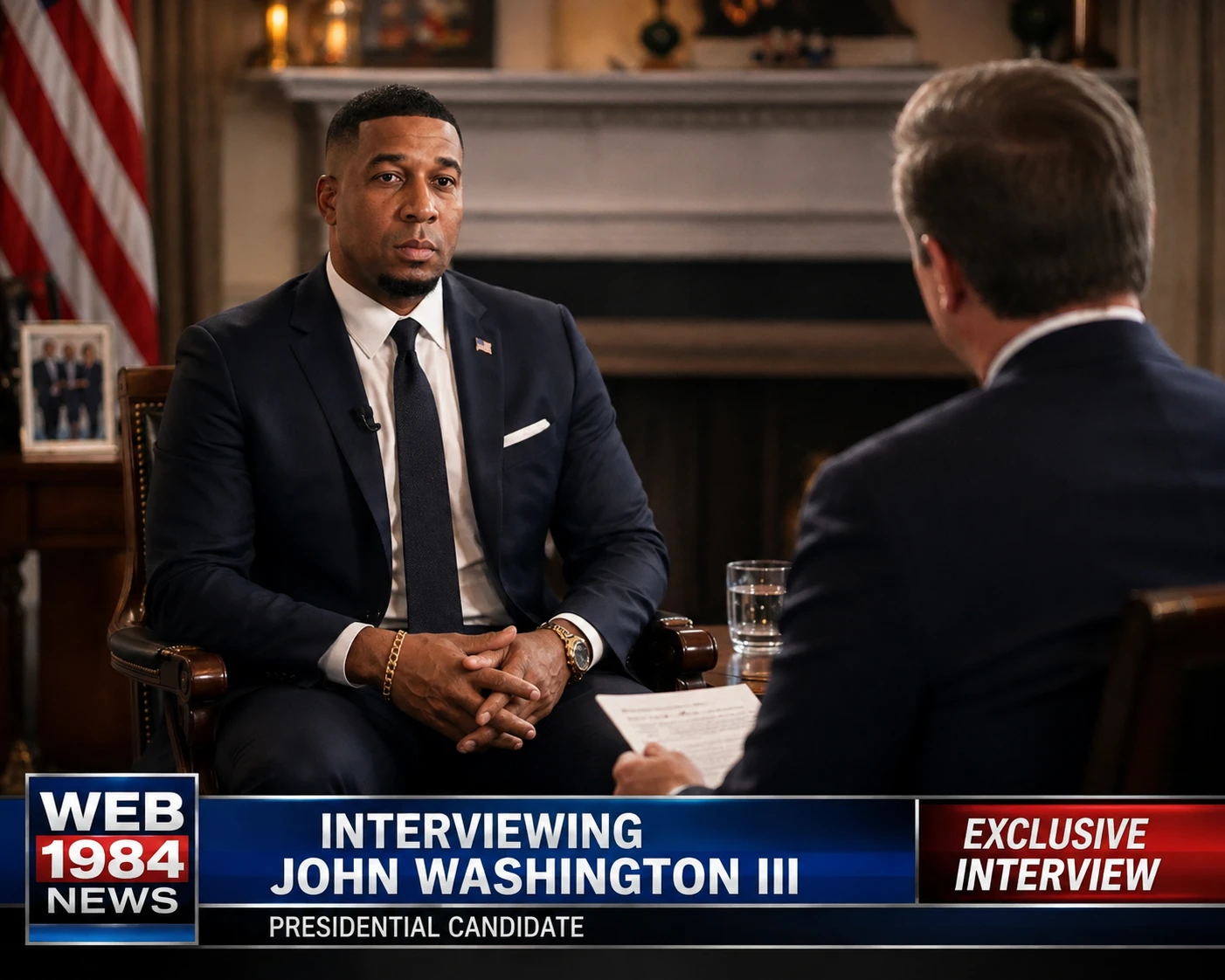
Washington does not want his 2028 campaign defined simply by traditional partisan battles. Instead, he wants to focus attention on the relationship between citizens and government itself.
He argues that senators, members of Congress, state legislators and other public officials should remember that their fundamental responsibility is to the people—not merely to preserving government revenue or defending the institutions where they work.
Critics may strongly disagree with Washington's characterization of government as a system that too often protects itself. Government officials could point to public safety, infrastructure, education, healthcare programs and other services as reasons states and the federal government require significant revenue.
Washington welcomes that debate.
His position is that government should be able to explain and justify what it takes from citizens, what it spends, and why.
Why Washington Believes the Establishment Pushes Back
Washington believes this willingness to question established systems makes some political figures uncomfortable.
He says traditional politicians frequently debate individual laws while avoiding larger questions about how those laws collectively affect ordinary citizens.
Washington wants to reverse that relationship.
Instead of beginning with the interests of the government and asking citizens to comply, he argues policymakers should begin with the interests and constitutional rights of the people and then determine what authority government genuinely needs.
That philosophy could produce confrontations with both state and federal institutions.
Washington appears prepared for them.
For him, political opposition is not necessarily evidence that he should soften his message. He views resistance as an expected consequence of challenging institutions that have operated in essentially the same manner for generations.
“One Big Racket”
Washington has used especially strong language to describe the relationship between government, money and political power, calling parts of the system “one big racket.”
It is a provocative characterization, and one that will inevitably attract both supporters and critics.
But Washington says the purpose of the phrase is to force Americans to examine systems they may otherwise take for granted.
His argument is not that every government employee, police officer, judge, legislator or public official is corrupt. Rather, he contends that a system itself can create incentives that prioritize collecting revenue, maintaining authority or protecting institutions even when the individuals working inside that system believe they are simply doing their jobs.
That is a much larger accusation—and one Washington says deserves a national conversation.
A Different Kind of 2028 Campaign
The 2028 presidential election will involve debates over the economy, public safety, foreign policy, immigration, healthcare, taxes and the future direction of the country.
Washington wants another subject added to that list:
How much do Americans really understand about the government systems operating around them every day?
His campaign intends to examine those systems piece by piece—from the state level to the federal government—and explain them in language ordinary citizens can understand.
Washington knows that approach could create enemies in politics.
He appears comfortable with that possibility.
His message to voters is straightforward: elected officials should never become more loyal to a government institution than they are to the people who placed them in office.
Washington says he intends to keep asking uncomfortable questions, following the money, examining government policies and explaining what he discovers to the public.
Whether Americans ultimately agree with his conclusions will be decided through public debate and, eventually, at the ballot box.
But Washington wants voters to hear the argument first.
Politicians may not like what he has to say.
John Washington III says that will not stop him from talking about it.



Be the first person to comment.