
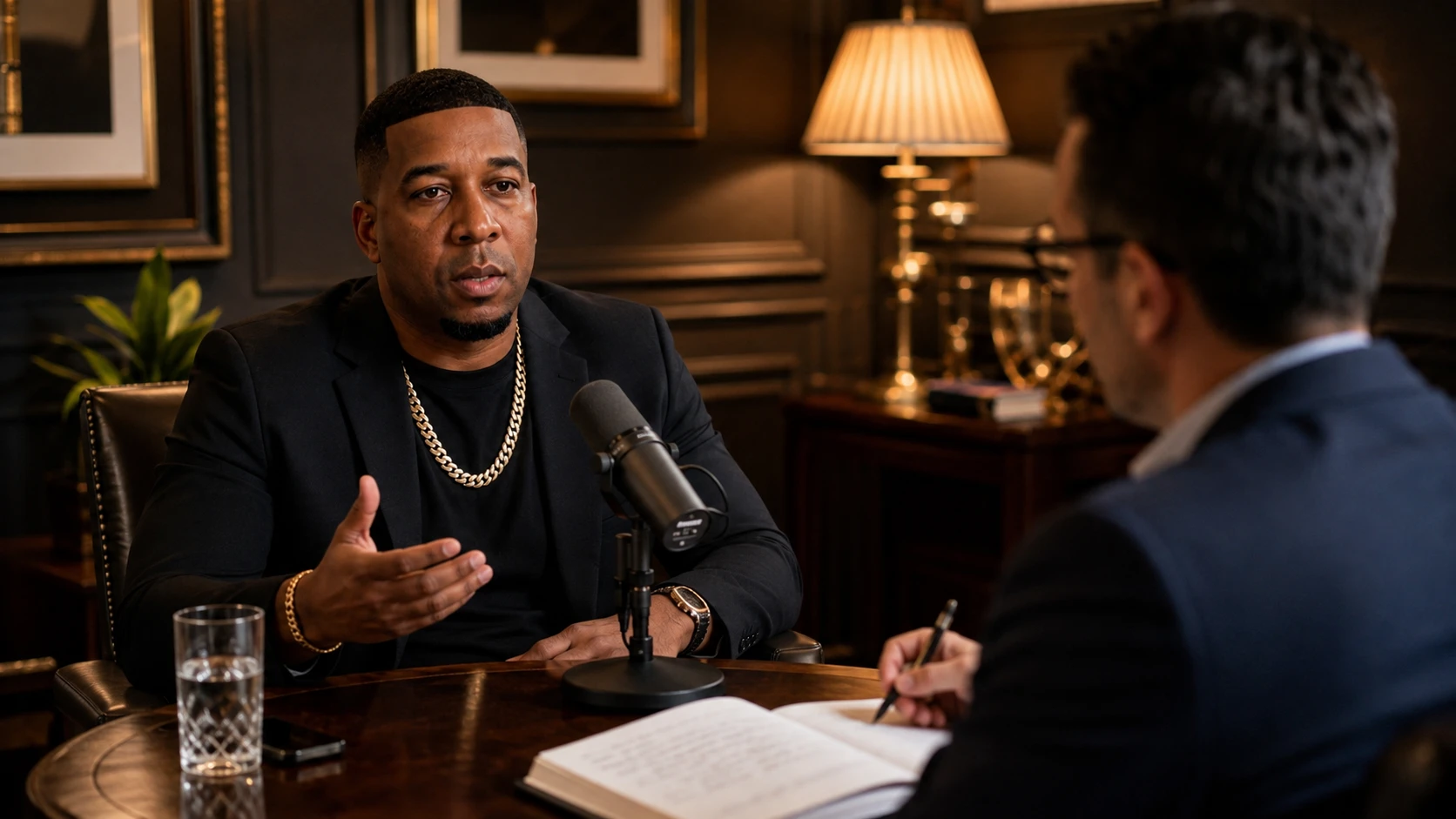
John Washington III does not want voters to judge his political campaign by speeches alone. He says he would rather be measured by what he actually does.
“Don’t take me seriously,” Washington said during an interview about his political run. “Take my actions and everything that I’ve been doing serious. Don’t take what’s coming out of my mouth serious — take my actions, what I’m doing, me walking the walk, me trying to fix what needs to be fixed. Take that serious, because anybody can say anything.”
That philosophy sits at the center of Washington’s political message.
He describes himself as a regular person who has accomplished a number of things throughout his life but has not forgotten what it is like to live among the same people affected by decisions made at the local, state and federal levels.
Washington says his reason for entering politics is straightforward: he believes too many things in government are broken, corruption has become too deeply rooted, and somebody needs to confront it.
For Washington, the campaign is beginning to resemble a modern-day David-versus-Goliath fight — an independent-minded candidate attempting to challenge a political system where money, institutional support, name recognition and powerful organizations can determine who gets heard.
A Crisis of Trust
Washington believes one of the largest problems facing American politics is a widespread lack of trust.
“In the society that we have right now, nobody trusts nobody,” he said.
But Washington argues that distrust does not affect every candidate equally. He believes voters are often more willing to trust politicians who have been repeatedly placed before them by major political institutions and media organizations.
Washington said candidates supported by the established political system frequently begin campaigns with advantages that grassroots candidates do not have.
Meanwhile, he said, another candidate may be working directly in communities, promoting independently and attempting to build support without the same institutional machinery.
Washington believes voters sometimes still gravitate toward the candidate backed by the larger system.
“They would rather trust and believe and support and donate and give their votes to the people that’s a part of the system than the person that had to really get out in the city and promote and do all the work for the community,” he said.
For Washington, that reality is part of the battle he has chosen to enter.
Refusing to Beg for Votes
Washington also rejects the idea that a candidate should tell voters whatever they want to hear simply to become more popular.
Asked how he intends to build trust with voters, Washington gave an answer rarely heard from political candidates: he said he is not interested in performing for people just to secure their votes.
“I’m just in politics to fix what needs to be fixed,” Washington said.
He continued: “I’m not really trying to shine no boots or trying to win people over just to get their votes.”
Instead, Washington says he wants to work with people who genuinely share his desire to address problems in government and in communities.
“If anyone is willing to help me fix this problem that we have going on in our communities and our local government, our state government and our federal government, then I will welcome them,” he said.
But Washington drew a line between cooperation and political pandering.
“I’m not about to kiss somebody’s ass who I’m trying to help,” he said.
That statement captures a central feature of Washington’s political identity: he does not want his campaign to be built around trying to appear perfect, polished or manufactured.
He wants it built around the work.
Taking On Corruption
Washington says his political motivation goes beyond winning an election.
He wants to confront what he views as corruption within government and challenge a political structure that he believes has become too disconnected from ordinary citizens.
His message is not that every government official is corrupt or that every institution is beyond repair. His argument is that the system contains serious problems that cannot be ignored simply because challenging them may be politically uncomfortable.
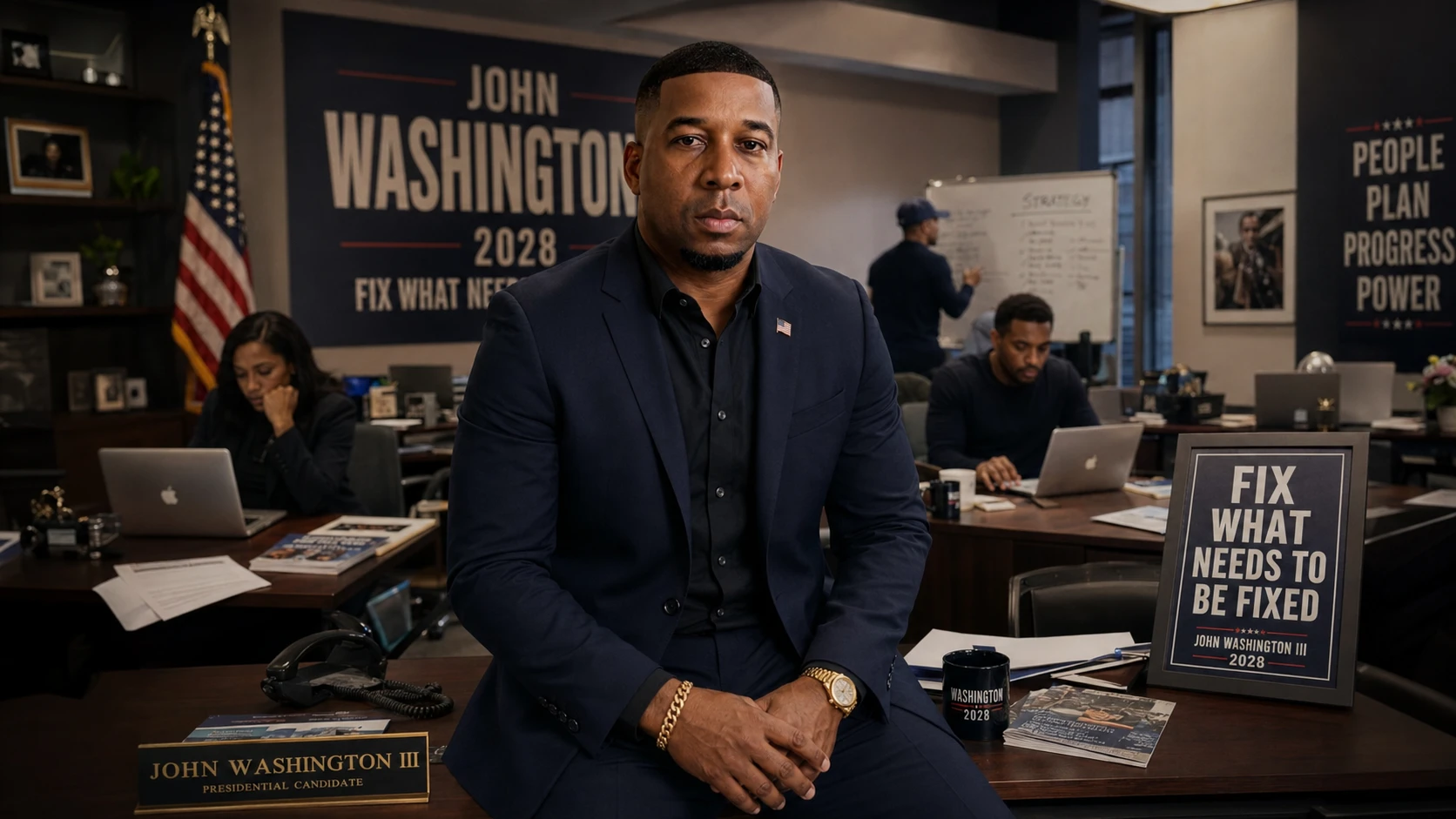
Washington wants his campaign to represent people who believe government should work differently and who are frustrated by politicians making promises during election season only to return to business as usual afterward.
That is why Washington repeatedly comes back to one word: action.
Speeches can be written. Promises can be made. Campaign advertisements can be produced. Political consultants can create slogans.
Washington says none of those things should matter more than what a candidate actually does.
Still Building
Washington is also careful not to portray his political journey as something that has already been accomplished.
Asked what political achievement he is most proud of so far, he declined to manufacture an accomplishment simply to provide a convenient answer.
“It’s still a long road,” Washington said.
“I wouldn’t say I’m proud of anything in politics that I’m doing right now, because I’m still building.”
What he is proud of, he said, is continuing.
“I’m proud to be still working and trying to build and trying to fight for our people,” Washington said.
That distinction is significant.
Rather than declaring victory before the work has been completed, Washington describes himself as a candidate who remains in the construction phase — building an organization, developing his political presence and continuing to push his message despite the obstacles facing a candidate without traditional establishment advantages.
Walking the Walk
Washington’s campaign ultimately comes down to a challenge he is making directly to the public:
Do not believe him simply because he is running for office.
Watch him.
Watch what he does.
Watch whether he continues working when the cameras are gone.
Watch whether he fights for the same issues after an election that he talked about before it.
Watch whether his actions match his words.
Washington is asking voters to apply a standard that could just as easily be used against him as it could against his opponents.
And he appears comfortable with that.
“Anybody can say anything,” Washington said.
For John Washington III, the campaign is not supposed to be about convincing people that he is different.
He wants to prove it.
And if his political journey truly becomes a David-versus-Goliath fight, Washington appears determined to make his case the old-fashioned way — not by asking people to believe the man making the promises, but by asking them to watch the man doing the work.




Be the first person to comment.