
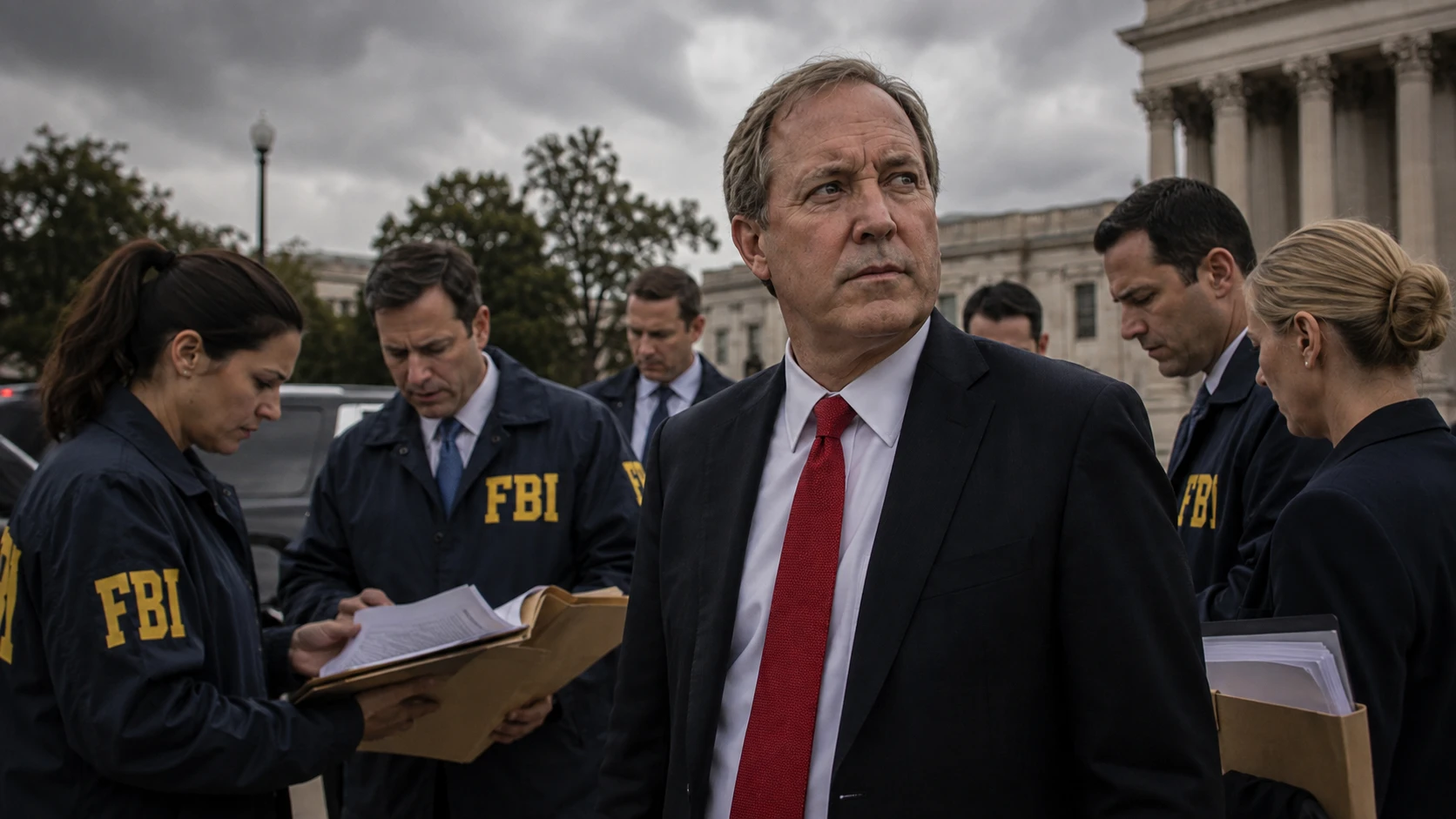
In 2020, an extraordinary conflict erupted inside the Texas Attorney General’s Office: some of Attorney General Ken Paxton’s own senior officials went to law enforcement with allegations that their boss had abused the power of his office.
The controversy would ultimately lead to an FBI investigation, a whistleblower lawsuit, Paxton’s historic impeachment by the Texas House, a trial in the Texas Senate, and years of legal and political battles. Paxton consistently denied wrongdoing, was acquitted by the Texas Senate in 2023, and the U.S. Department of Justice ultimately declined to prosecute him following its federal investigation.
Senior Officials Sound the Alarm
The story began publicly in the fall of 2020.
On September 30, seven senior officials in the Texas Attorney General’s Office reported Paxton to law enforcement over allegations involving possible bribery and abuse of office. An eighth senior official made a similar report the following day, according to reporting and records reviewed by The Texas Tribune.
These were not outside political activists making accusations against Paxton. They were senior members of his own office.
Among those involved were officials such as Ryan Bangert, Blake Brickman, Lacey Mase, Darren McCarty, Ryan Vassar, Jeff Mateer, Mark Penley and David Maxwell. Several held major leadership positions within the Attorney General’s Office.
Their allegations centered largely on Paxton's relationship with Austin real estate investor and political donor Nate Paul.
The whistleblowers alleged that Paxton had used the authority and resources of the Attorney General's Office in ways that benefited Paul.
Paxton strongly rejected the allegations. He described them as false and characterized some of the employees as “rogue.”
What Did the Employees Accuse Paxton of Doing?
One major point of contention involved Paul's complaints against federal and state authorities.
Paul's home and business had been searched by the FBI in 2019. He later alleged misconduct by authorities involved in the investigation.
According to Paxton's aides, Attorney General's Office personnel reviewed Paul's allegations and concluded that they lacked a sufficient factual basis. Despite objections from senior staff, the whistleblowers alleged that Paxton subsequently hired outside attorney Brandon Cammack to investigate Paul's complaints.
The aides argued that some of the investigative actions being taken appeared to relate to Paul's private business disputes rather than a legitimate state investigation.
That became one of the central questions surrounding the controversy: Was the power of the Texas Attorney General's Office being used to advance the interests of a private individual who was also a political donor?
Paxton maintained that he had committed no crime.
The FBI Investigation
The whistleblowers' complaints led to a federal investigation.
The FBI investigated allegations surrounding Paxton, and the investigation eventually came under the control of the Justice Department's Public Integrity Section in Washington, which specializes in potential corruption involving public officials.
The investigation continued for several years.
That distinction is important when discussing this story: being investigated is not the same as being convicted or even charged with a crime.
Paxton was never federally charged in connection with these allegations.
What Happened to the Whistleblowers?
The dispute inside the Attorney General's Office quickly became a controversy of its own.
Ultimately, several of the officials who reported Paxton were fired, while others resigned. Four former aides later sued under Texas whistleblower law, alleging that they had been improperly retaliated against for reporting suspected wrongdoing.
Paxton and his office disputed allegations of unlawful retaliation.
The whistleblower case became particularly significant because an attempted $3.3 million settlement eventually drew scrutiny from Texas lawmakers over why taxpayers should finance the settlement. That scrutiny contributed to a Texas House investigation into Paxton.
The Texas House Impeaches Paxton
In May 2023, the Republican-controlled Texas House of Representatives voted to impeach Paxton.
Many of the accusations underlying the impeachment overlapped with allegations raised by his former employees.
The impeachment allegations went beyond simply claiming that Paxton assisted Nate Paul. House investigators also alleged that Paul provided benefits to Paxton in return, including assistance connected to renovations of Paxton's home. Those allegations were disputed by Paxton and his attorneys.
The impeachment temporarily suspended Paxton from his duties as attorney general while he awaited trial in the Texas Senate.
The Texas Senate Acquits Paxton
In September 2023, the Texas Senate conducted an impeachment trial.
Former members of Paxton's staff testified about what they had witnessed inside the Attorney General's Office, including disagreements over the handling of matters involving Nate Paul.
After the trial, senators voted to acquit Paxton on all 16 impeachment articles considered in the trial. The remaining four articles were dismissed. Paxton returned to office.
The acquittal was a major political victory for Paxton.
It did not, however, immediately end the separate federal investigation.
Justice Department Eventually Declines Prosecution
The federal investigation remained unresolved for years.
Then, in April 2025, the Associated Press reported that the Justice Department had quietly decided during the final weeks of the Biden administration not to prosecute Paxton, effectively ending the federal corruption investigation.
According to the AP's reporting, federal prosecutors in Texas at one stage believed evidence existed to support an indictment. But the Justice Department's Public Integrity Section ultimately recommended against prosecution because of concerns about whether prosecutors could obtain a conviction.
No federal criminal charges resulted from the investigation.
Paxton described the investigation as politically motivated and continued to maintain his innocence.
Why This Story Matters
Regardless of someone's political position on Ken Paxton, the episode raises a broader question about government accountability.
When senior government officials believe that someone above them may be abusing governmental authority, what are they supposed to do?
The people who reported Paxton were not merely political opponents observing his administration from the outside. They occupied senior positions within the very office Paxton controlled.
At the same time, allegations — even allegations made by high-ranking officials — are not proof of criminal guilt. Paxton was entitled to dispute the allegations, was acquitted in his impeachment trial, and was ultimately not prosecuted by the Justice Department.
Both facts belong in any fair account of what happened.
The historical record therefore contains two important realities: senior members of Ken Paxton's own office reported him to law enforcement and triggered a major federal investigation, and that investigation ultimately ended without federal charges against him.
For Texans deciding what they believe about the episode, the strongest approach is not to rely on political slogans from either side. It is to examine the allegations, testimony, government records, investigative findings and eventual outcomes.
Accountability requires scrutiny of those exercising government power.
Fairness requires acknowledging what was alleged — and what was never proven in a criminal court.

Be the first person to comment.