
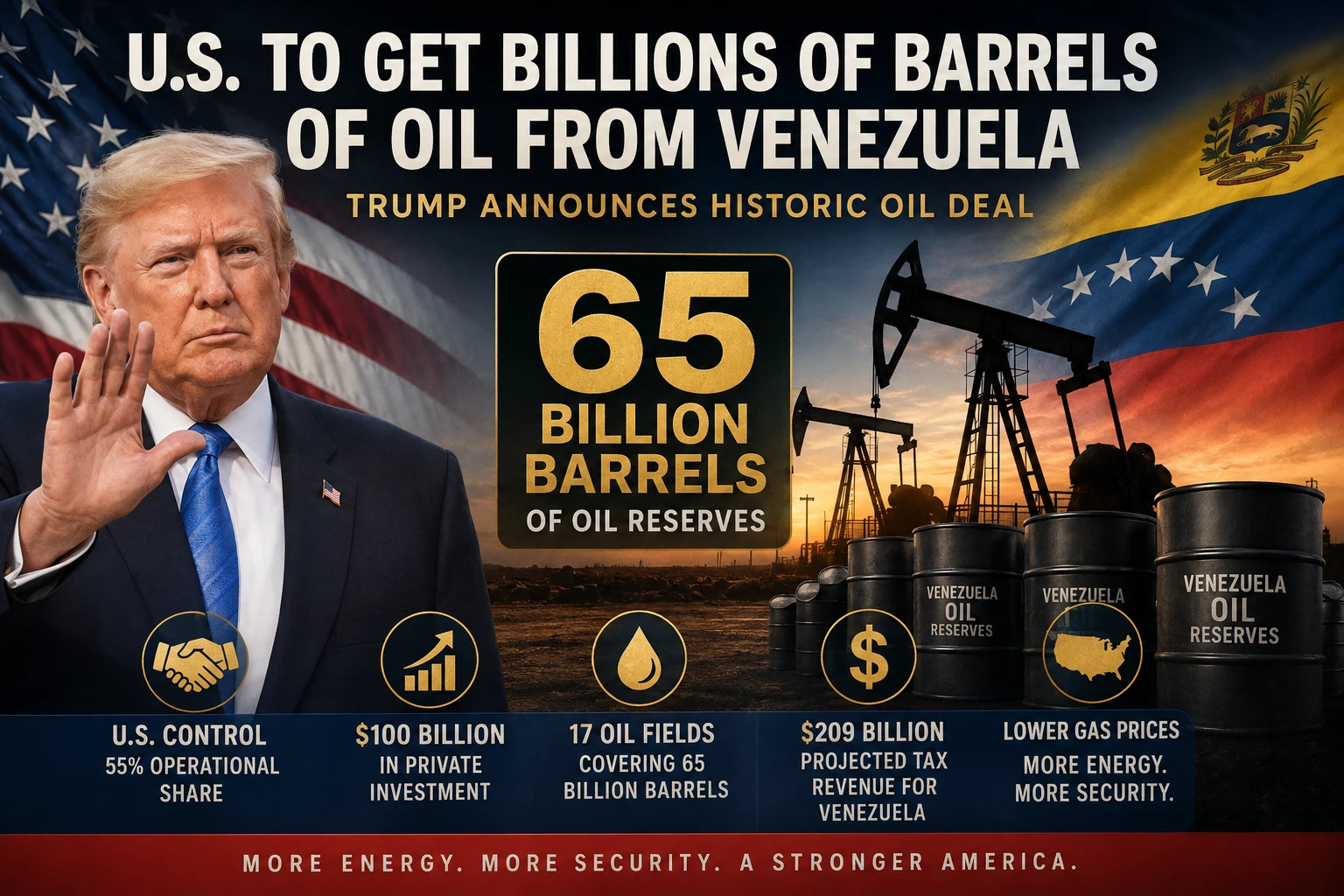
WASHINGTON — President Donald Trump says the United States has reached a sweeping oil agreement with Venezuela that could give the U.S. majority control over the development of approximately 65 billion barrels of proven Venezuelan oil reserves, a deal Trump is calling the largest oil agreement in history.
Trump announced the agreement Friday, August 28, saying it was negotiated by Secretary of State Marco Rubio, Defense Secretary Pete Hegseth and Venezuela’s acting President Delcy Rodríguez. Venezuela’s government separately said the agreement involves the development of 17 oil fields with an estimated proven potential of 65 billion barrels.
The scale of the announcement is enormous. Venezuela possesses roughly 303 billion barrels of proven crude-oil reserves, the largest total in the world. The 65 billion barrels covered by the announced agreement would represent more than one-fifth of those reserves.
But despite the size of Venezuela's underground reserves, getting that oil out of the ground, processed and delivered to global markets is a much more complicated issue.
Trump Says Deal Could Lower Gas Prices
Trump presented the agreement as part of his administration's strategy to increase energy supplies and reduce fuel costs for Americans.
According to the administration's description, a new company involving the United States and a private operator would develop Venezuelan oil fields. The United States would reportedly hold a 55% operational share and would have the ability to purchase oil at cost. The administration says some of that supply could be used to replenish U.S. petroleum reserves and meet other government energy needs.
Trump said the arrangement could ultimately more than double the amount of petroleum reserves accessible to the United States and put downward pressure on gasoline prices.
The announcement comes during a period of heightened concern about global energy supplies and oil prices. International oil markets have been affected by continuing conflict involving Iran, sanctions, shipping risks and uncertainty surrounding major oil-producing regions.
For American consumers, however, the important question is whether this agreement actually translates into cheaper gasoline.
That is unlikely to happen immediately.
65 Billion Barrels Does Not Mean 65 Billion Barrels Are Coming to America Tomorrow
One important distinction in Trump's announcement is the difference between oil reserves and oil that is ready to be produced.
The 65 billion barrels represent estimated petroleum reserves beneath Venezuelan territory. They are not billions of barrels sitting in storage waiting to be shipped to American refineries.
Much of Venezuela's petroleum, particularly in the Orinoco Belt, is extremely heavy crude. Producing it economically requires drilling equipment, specialized infrastructure, pipelines, processing facilities, electricity, maintenance and enormous amounts of investment.
Years of political instability, sanctions, nationalization and insufficient investment severely weakened Venezuela's petroleum infrastructure.
That means significant increases in production could take years rather than months. Energy analysts have also raised questions about whether the agreement can attract enough capital and whether companies will have sufficient legal protections to justify massive long-term investments.
Private Companies Could Invest Around $100 Billion
One of the most significant parts of the proposed arrangement is the expected involvement of private investment.
The agreement could generate roughly $100 billion in private investment aimed at restoring Venezuela's petroleum industry. Venezuelan officials have projected that expanded development could eventually produce approximately $209 billion in tax revenue for the country.
American energy companies are already evaluating opportunities there.
Chevron and other U.S. firms have reportedly been discussing billions of dollars in Venezuelan investments. Chevron could expand its involvement in heavy-oil fields, while oil-services companies such as Halliburton have also been involved in discussions surrounding equipment and production services.
However, some major petroleum companies remain cautious.
Venezuela has a long history of disputes with international energy corporations. ExxonMobil and ConocoPhillips, for example, were affected when Venezuela nationalized foreign petroleum assets beginning in the 2000s. Such experiences remain an important consideration for companies deciding whether to invest billions of dollars in the country again.
Venezuela Could Receive an Economic Lifeline
For Venezuela, the agreement could provide something the country desperately needs: investment.
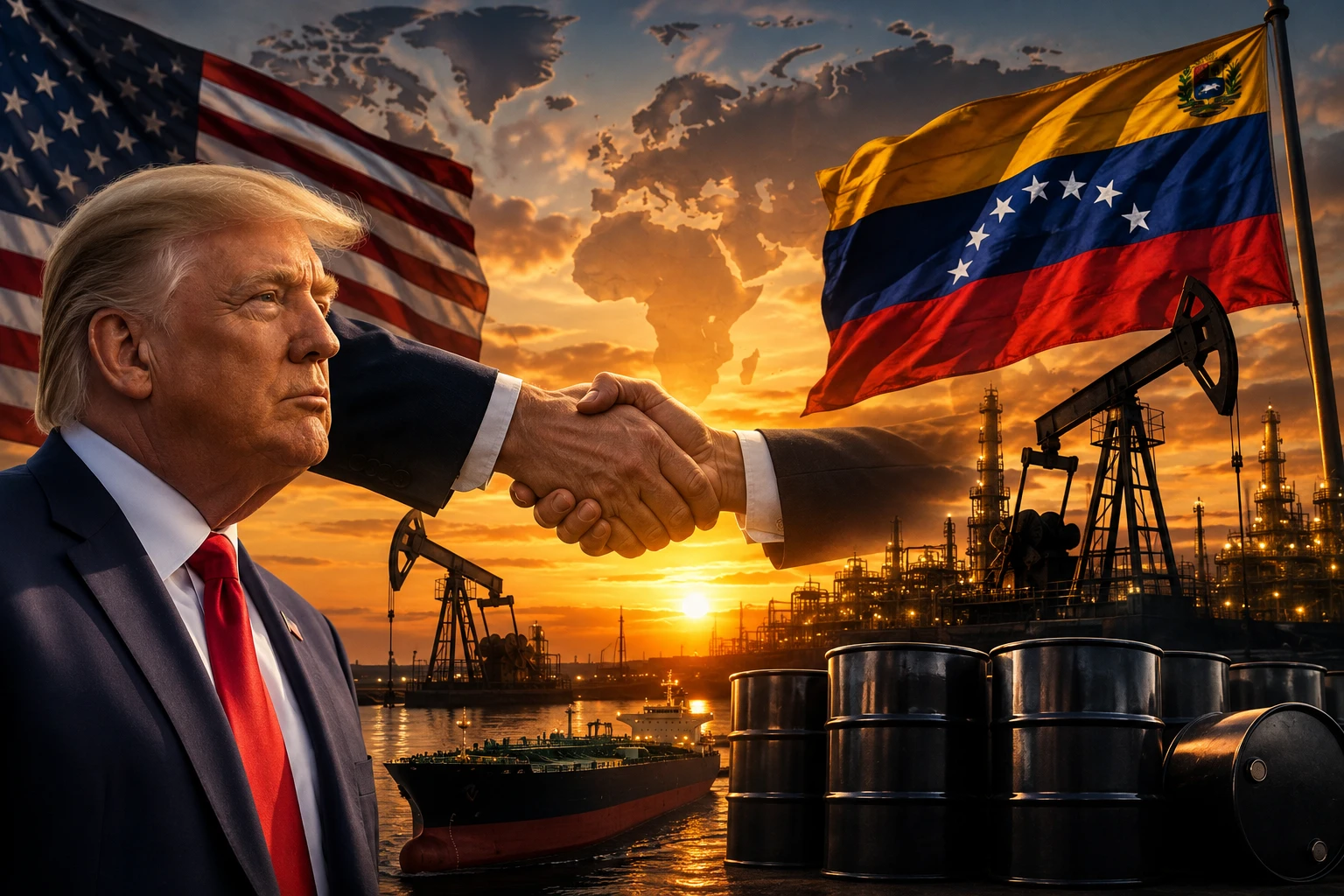
The nation has enormous natural resources but has struggled economically for years. Oil production, once the foundation of Venezuela's economy, fell dramatically amid political upheaval, economic mismanagement, sanctions and deterioration of petroleum infrastructure.
Rodríguez's government has supported the new arrangement as an opportunity to revive production, attract international investment, create employment and increase government revenue.
The government has also taken steps allowing greater private participation in an industry that historically operated under strong state control.
If investment reaches the levels being discussed, oil production could eventually become a major engine for Venezuela's economic reconstruction.
Questions Remain About What “U.S. Control” Actually Means
Despite Trump's announcement, several critical details remain unclear.
Exactly what legal authority the United States would possess over Venezuelan oil fields has not been fully explained publicly. Neither has the complete ownership structure of the proposed company, the identity of every private operator involved, the investment schedule or how revenues will ultimately be divided.
Those details matter because Venezuela's petroleum belongs legally to Venezuela, and the country's constitution and petroleum laws traditionally impose significant restrictions on foreign ownership.
Reuters reported that analysts have questioned whether the arrangement can function under Venezuela's existing legal structure without additional legislative or contractual changes.
Therefore, Trump's description of the U.S. taking “control” of 65 billion barrels should not be interpreted as the United States simply becoming the owner of 65 billion barrels of Venezuelan oil.
The arrangement appears to concern control over development and operational rights in specific petroleum fields.
A Major Shift in U.S.-Venezuela Relations
The deal also represents a dramatic transformation in the relationship between Washington and Caracas.
For years, the two governments were bitter political adversaries. U.S. sanctions targeted Venezuela's petroleum sector, while Venezuela's leadership regularly accused Washington of attempting to control the country's natural resources.
Now the two governments are discussing one of the largest petroleum-development arrangements ever proposed.
That could reshape not only Venezuela's economy but also America's energy strategy throughout the Western Hemisphere.
Instead of relying exclusively on Middle Eastern supplies or expanding production domestically, access to Venezuelan heavy crude could provide U.S. refiners with another major regional source.
Could It Really Lower Gas Prices?
Possibly — but not immediately.
If billions of dollars are successfully invested, Venezuelan production rises substantially and more crude enters the global market, the additional supply could eventually place downward pressure on oil prices.
But gasoline prices are influenced by numerous factors, including global crude prices, refinery capacity, transportation costs, taxes, seasonal demand, wars, sanctions and decisions by major oil-producing countries.
There is therefore no guarantee that Americans will suddenly see dramatically cheaper gasoline simply because the agreement has been announced.
The physical oil still must be developed.
The Bigger Picture
Trump's announcement is unquestionably significant because of the sheer amount of petroleum involved.
Sixty-five billion barrels is an extraordinary resource.
If the agreement survives political, legal and financial challenges and production eventually reaches projected levels, it could transform Venezuela's petroleum sector while giving the United States unprecedented access to one of the world's largest concentrations of oil.
But the announcement should also be viewed as the beginning of an enormous industrial undertaking rather than the completion of one.
The real test will come next: which companies invest, how Venezuela structures ownership, how quickly damaged infrastructure can be restored, how much petroleum can actually be produced and whether any resulting increase in supply reaches American consumers in the form of lower prices.
For now, Trump has announced one of the most ambitious petroleum agreements in modern history.
Whether it becomes one of the most successful will depend on what happens underground, in corporate boardrooms and between the governments of the United States and Venezuela over the years ahead.





Be the first person to comment.