
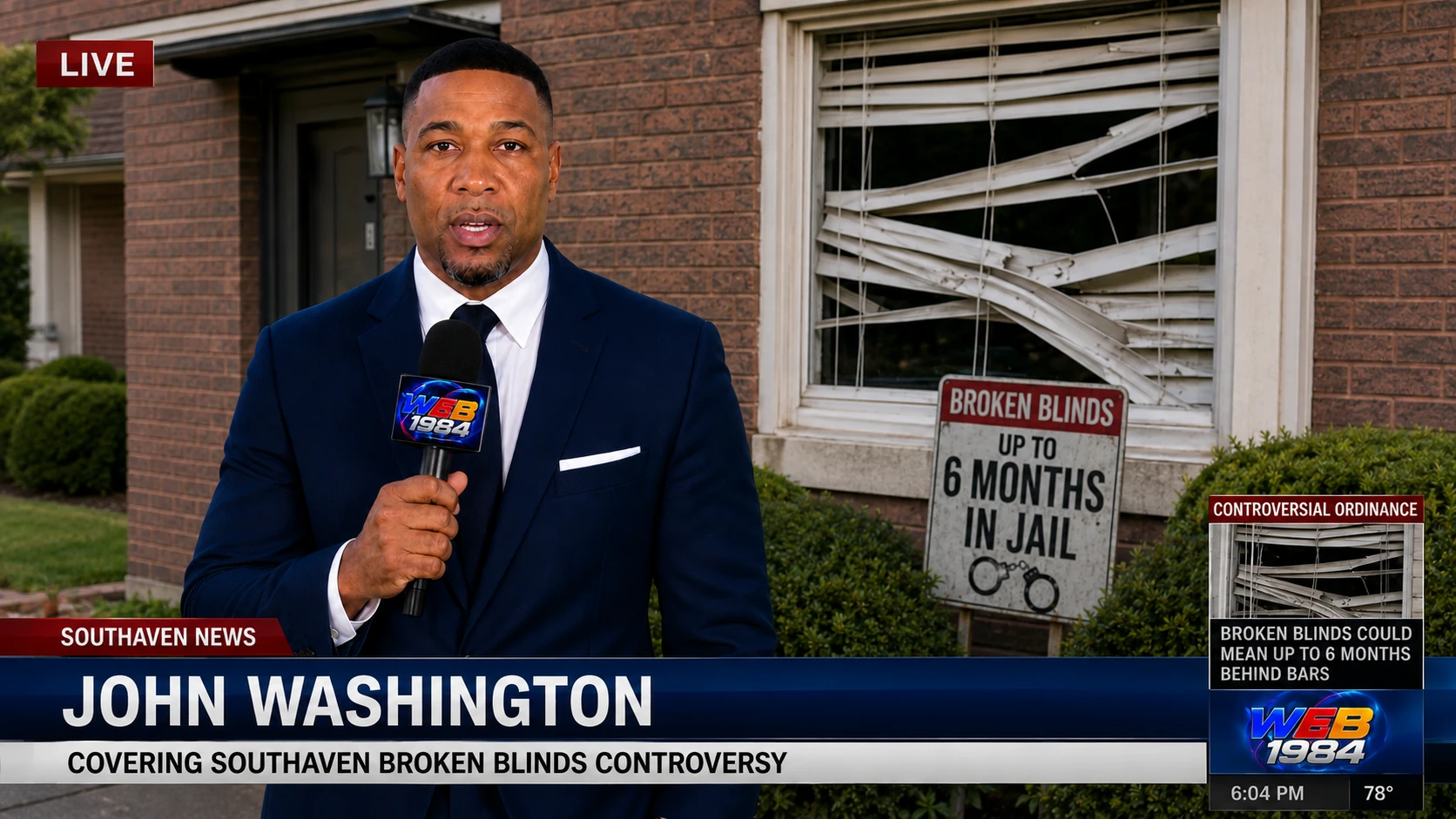
A new property-maintenance rule in Southaven, Mississippi, is raising a question that goes far beyond window blinds: How much authority should a local government have over the condition of a person’s home?
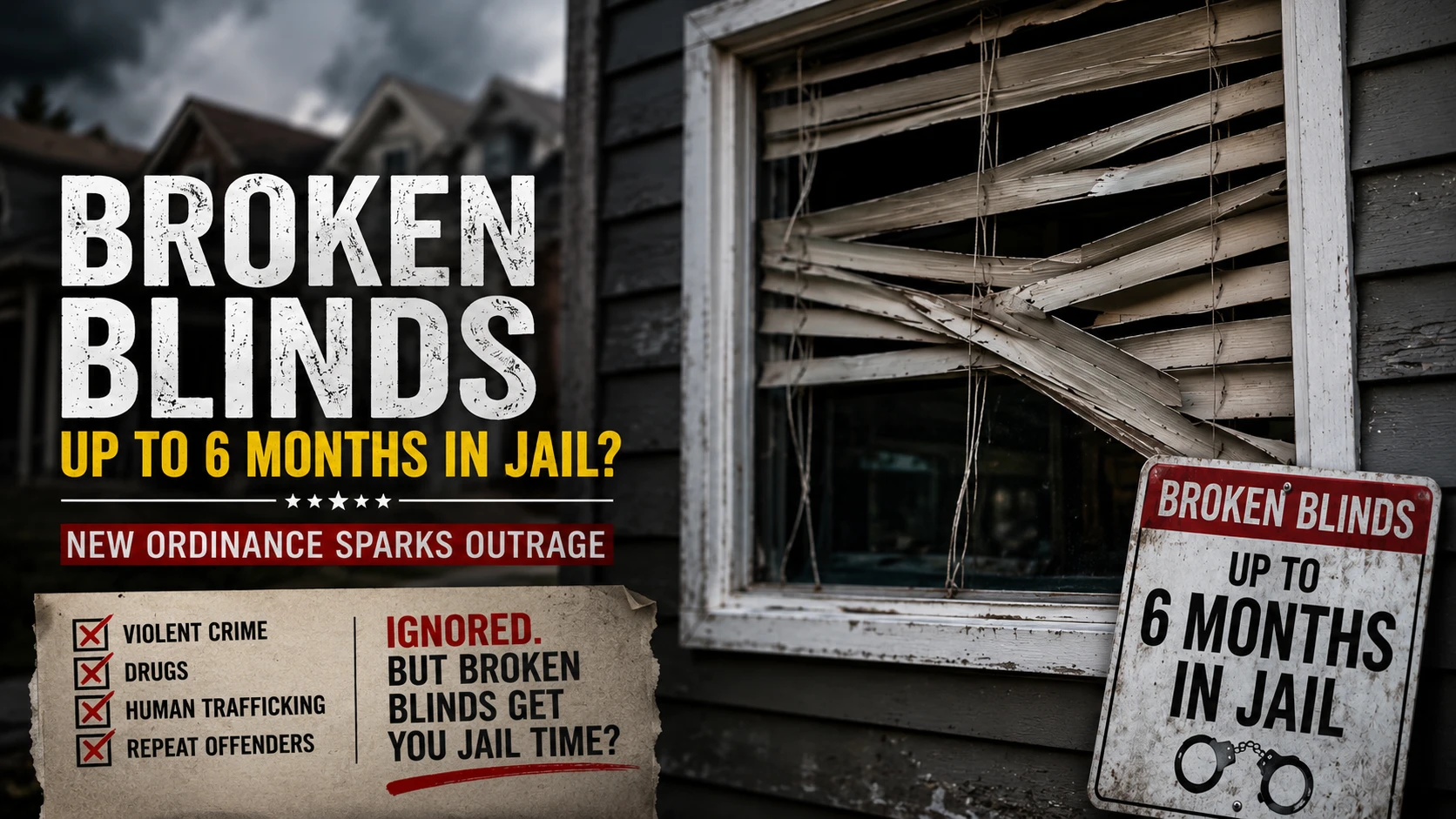
In July 2026, Southaven’s Mayor and Board of Aldermen voted to expand the city’s property-maintenance rules to cover visibly broken or bent interior window coverings, including blinds, shutters and shades. The rule applies when those conditions can be seen from a public street. The city also prohibited using materials that were not manufactured as window coverings. The measure passed by a 6-1 vote.
At first glance, this may sound like an ordinary neighborhood beautification measure. Cities across America already regulate abandoned vehicles, unsafe buildings, excessive trash, overgrown properties and other conditions that can affect health, safety and neighboring property values.
But this ordinance has attracted attention because of the severity of the penalties potentially available when a violation remains unresolved.
According to local reporting, a resident who receives a violation notice can be given up to 90 days to correct the problem. Continued noncompliance can lead to a fine of as much as $1,000, court costs and potentially up to six months in jail. Each additional day that an unresolved violation continues can also constitute another offense.
That distinction is important.
No, a police officer is not supposed to see a crooked blind through your window and immediately take you to jail for six months.
The enforcement process involves notice and opportunities to correct the violation. Reporting on the ordinance indicates that prosecution is intended to come after repeated noncompliance rather than as the first response to a damaged blind.
Nevertheless, the fact that incarceration can ultimately enter the picture has generated a legitimate debate about proportionality.
Why Southaven Says the Rule Is Necessary
Southaven Mayor Darren Musselwhite argued that badly damaged window coverings can negatively affect residential neighborhoods and property values.
While discussing the proposal, Musselwhite said broken window coverings were something city officials had noticed affecting the appearance and value of neighborhoods. He also acknowledged the need to balance enforcement with avoiding unnecessary hardship on residents.
That argument is not without merit.
Local governments have an obligation to address genuine blight. A severely neglected property can affect surrounding homeowners who have invested their savings into their houses. Vacant structures, dangerous buildings and chronic property neglect can also become public-safety concerns.
Southaven's existing property-maintenance framework already addresses numerous exterior conditions involving windows, shutters, walls, roofs and other parts of buildings. The city's publicly available materials describe damaged, missing, bent or deteriorated exterior components among the conditions that may contribute to a property being classified as blighted.
The real controversy is therefore not whether cities can have property-maintenance standards.
The controversy is how far those standards should reach inside someone's home and how severe the punishment should become.
A Broken Blind Is Not Necessarily Blight
There is a major difference between an abandoned house with shattered windows and a family whose child, dog or cat damaged several slats on a set of blinds.
A senior citizen living on a fixed income may delay replacing window coverings.
A working parent may have more urgent bills.
A renter may be waiting for a landlord to repair them.
Someone may simply have damaged blinds.
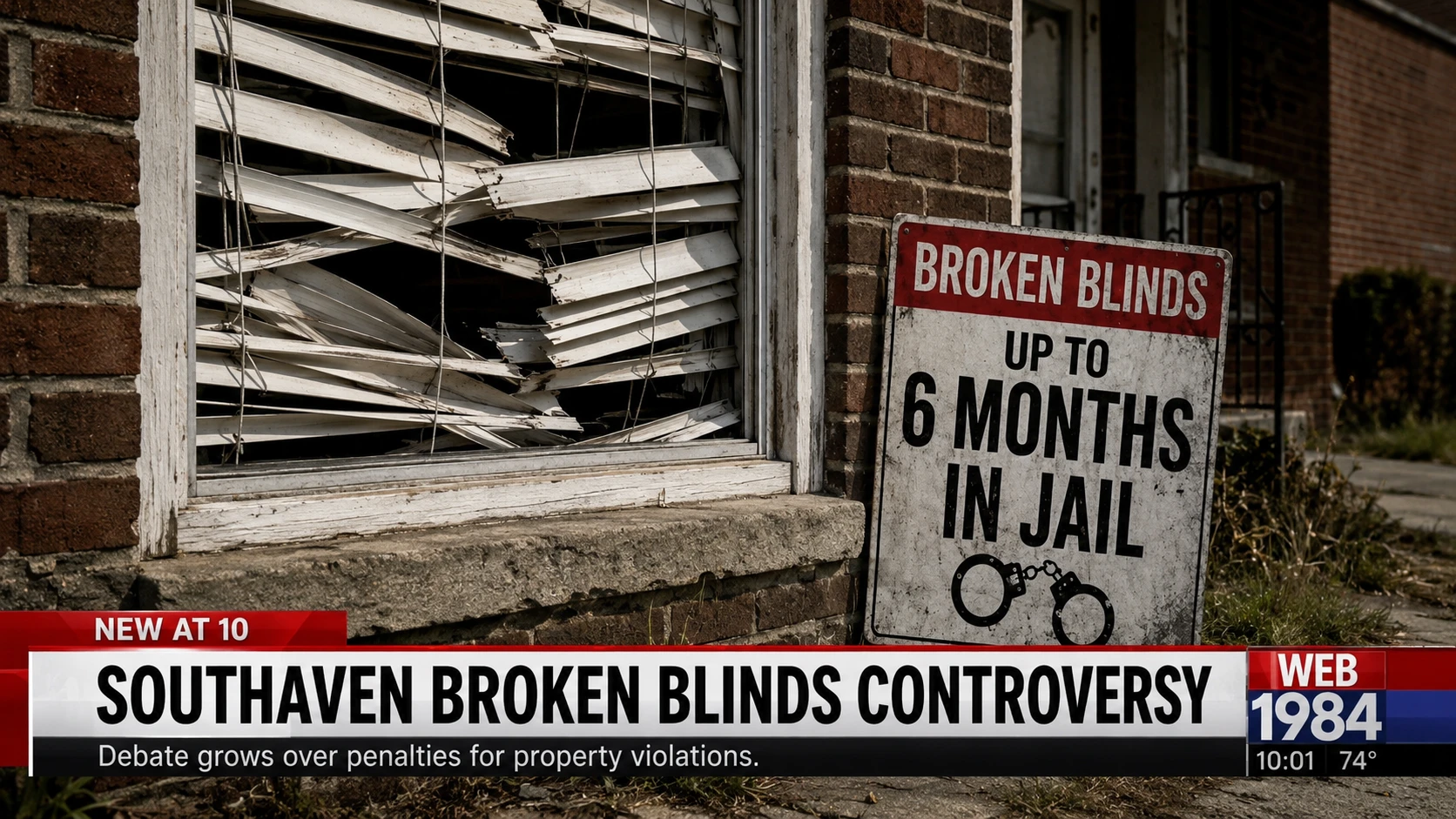
Those circumstances do not necessarily mean a neighborhood is deteriorating, nor do they establish criminal behavior.
That is why laws like this deserve scrutiny even when their underlying purpose—protecting neighborhoods—is legitimate.
Government regulation should normally distinguish between an actual danger to the public and a cosmetic imperfection.
A collapsing porch can injure someone.
Exposed electrical wiring can start a fire.
Accumulated garbage can create sanitation problems.
A severely damaged abandoned building can become dangerous.
Broken blinds visible through somebody's window are different.
When government treats aesthetic problems with penalties ordinarily associated with substantially more serious conduct, citizens are entitled to ask whether enforcement remains proportionate.
The Six-Month Jail Provision Changes the Debate
The most provocative part of this controversy is not really the blinds.
It is jail.
A city saying, “Your property does not comply with the maintenance code; please correct it,” is one thing.
A city possessing the legal authority to escalate unresolved cosmetic violations toward criminal prosecution, large fines and incarceration is another.
Supporters may argue that strong penalties are necessary because some property owners otherwise ignore repeated citations indefinitely.
There is logic behind escalating penalties for deliberate noncompliance.
But incarceration should be among the government's most serious sanctions because it deprives a person of liberty.
That raises a basic principle of criminal justice:
Should jail ever be a proportionate final punishment for refusing to replace broken window blinds?
Even if virtually nobody actually serves six months, the existence of the penalty matters. Laws are not judged only by the punishment government usually chooses to impose. They should also be examined according to what government is legally authorized to impose.
What About Poor and Working-Class Residents?
There is another concern that cannot be ignored.
A $1,000 fine does not affect everyone equally.
For a wealthy homeowner, $1,000 may be inconvenient.
For another household, it may represent rent, groceries, utilities, transportation or several weeks of income.
And that creates an uncomfortable enforcement cycle.
Suppose a resident has damaged blinds because he or she cannot afford replacements.
Government then issues a citation.
The person still cannot afford the repair.
Government adds a fine.
Now the resident has even less money available to make the repair.
Court costs can follow.
Eventually, the person can face increasingly serious consequences.
That is precisely where a beautification policy can unintentionally become punitive toward poverty.
A better code-enforcement system should recognize the difference between a property owner deliberately allowing a dangerous property to deteriorate and a resident who simply needs assistance correcting a minor condition.
There Are Less Punitive Alternatives
Southaven does not have to choose between having no standards at all and threatening jail.
There is an enormous amount of policy space between those two extremes.
For minor cosmetic violations, governments could use warnings, extended repair periods, small civil penalties, hardship exemptions, community-assistance programs or partnerships that help elderly and low-income residents make inexpensive repairs.
Repeat commercial or absentee property owners who deliberately ignore serious violations could be treated differently from ordinary homeowners.
The law can be firm without becoming excessive.
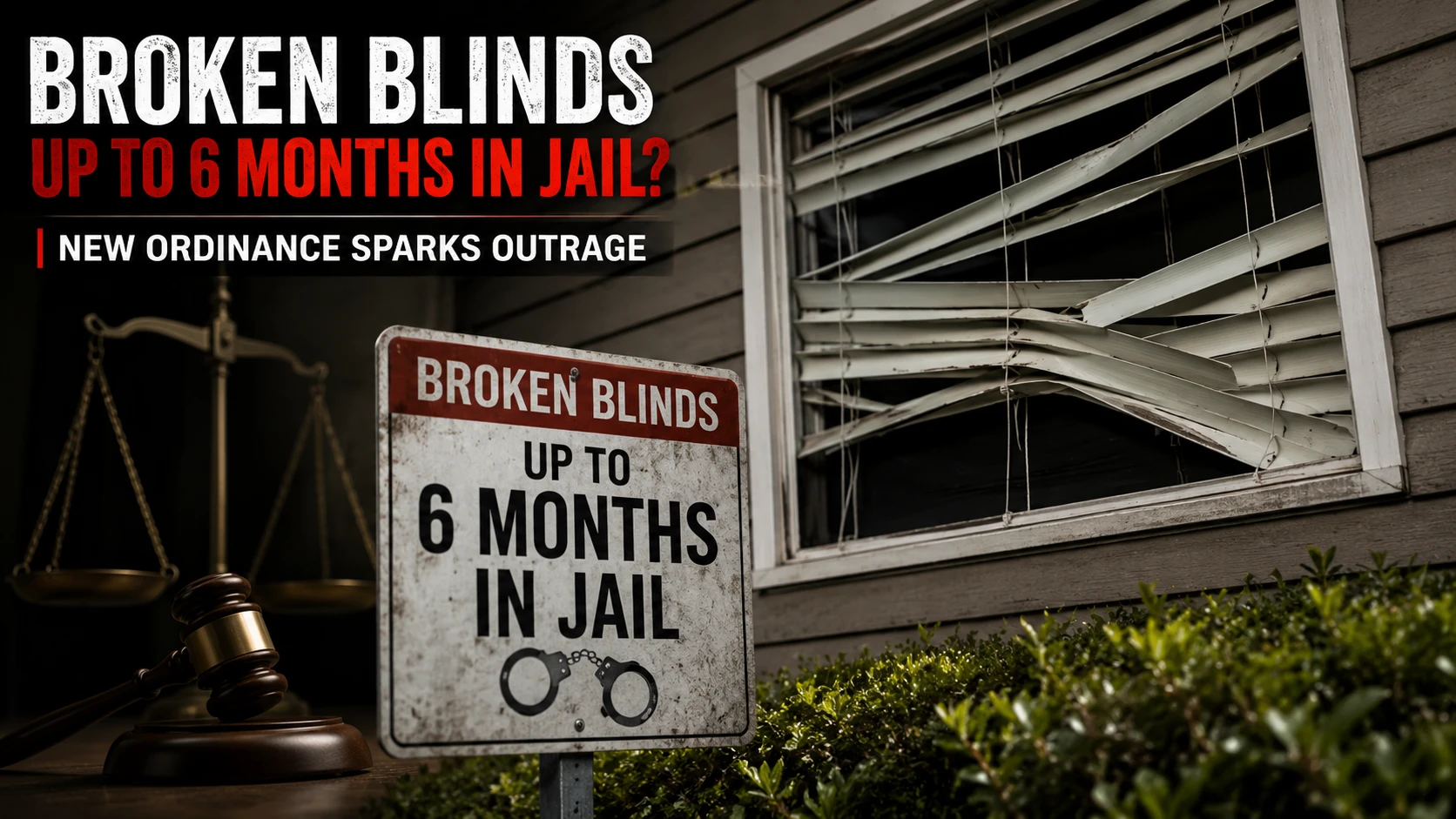
The objective should be compliance—not punishment for punishment's sake.
If replacing a set of blinds solves the problem, then government policy should be designed primarily around getting the blinds replaced.
Putting somebody behind bars does not repair a window.
Property Values Matter, but So Do Property Rights
Supporters of strict property codes often make another important argument: one homeowner's choices can affect everyone else.
That is true.
Property rights do not give someone unlimited authority to create hazards for neighbors.
That is precisely why zoning, nuisance and building-safety laws exist.
But property rights also mean something in the opposite direction.
The home has traditionally occupied one of the most protected areas of private life in America.
When government begins regulating objects inside a person's residence because they are visible from outside, the line between public nuisance regulation and private household regulation becomes considerably more sensitive.
The fact that something can be seen from the street does not automatically mean government should regulate it.
A government interested in preserving liberty should therefore ask two questions before creating another offense:
Is this regulation truly necessary?
And:
Is the punishment proportionate to the harm?
Those questions should apply regardless of which political party controls the government.
This Should Not Be Turned Into Something It Isn't
The viral claim that someone simply gets “six months in jail for broken blinds” leaves out important context.
There are notices, enforcement procedures and opportunities to correct the problem before such severe consequences become possible.
That should be stated clearly.
But correcting the exaggeration does not make the underlying policy immune from criticism.
Citizens do not have to choose between misinformation and unquestioning acceptance of government policy.
We can acknowledge exactly what the law says while still asking whether the government has gone too far.
That is what responsible public debate requires.
The Larger Question
Today the issue is broken blinds.
Tomorrow it could be another minor condition inside a home.
That is why seemingly small ordinances deserve attention.
Government power usually does not arrive all at once. It expands through thousands of individual statutes, regulations, administrative rules and ordinances—many enacted with perfectly reasonable intentions.
Every individual rule may appear insignificant.
Collectively, however, they determine the practical boundaries between government authority and individual freedom.
Southaven officials say their objective is protecting neighborhoods and maintaining property values. That is a legitimate governmental interest.
But residents are equally justified in demanding that the methods used to accomplish that objective remain reasonable.
We should be able to protect neighborhoods without criminalizing ordinary imperfections.
We should be able to enforce legitimate safety standards without treating every cosmetic problem as a matter for the criminal justice system.
And we should be extremely cautious whenever the words “six months in jail” appear anywhere near an offense involving damaged window blinds.
The question isn't whether communities should have standards.
They should.
The question is where those standards end and personal liberty begins.
And whenever government crosses that line, the people should have every right to challenge it.
Protect the neighborhood—but protect the citizen too.



Be the first person to comment.