
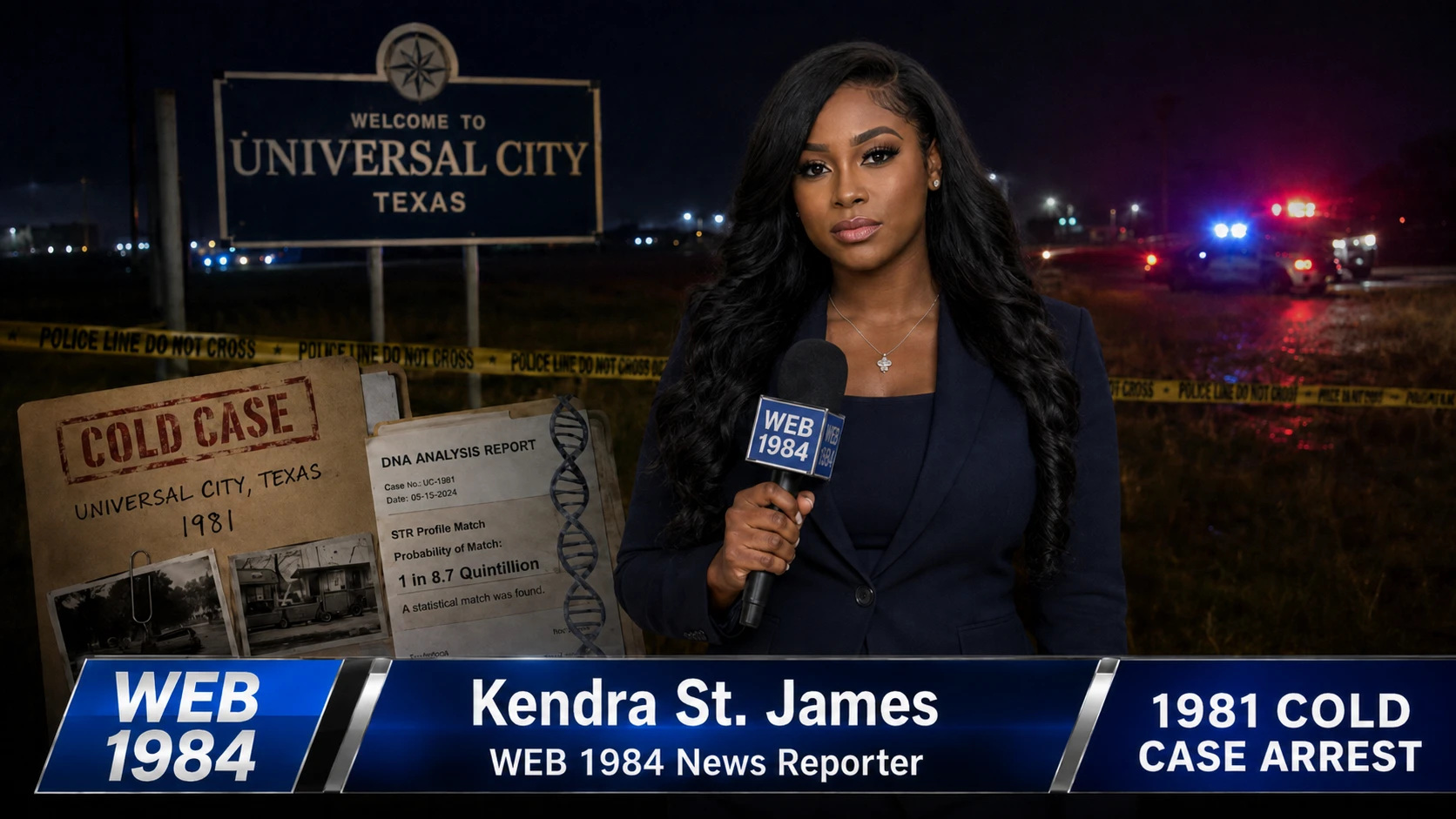
UNIVERSAL CITY, Texas — More than 45 years after 23-year-old Yolanda Herrera was found murdered in a field in Universal City, authorities say DNA evidence has led investigators to a man now charged in connection with her death.
Kelly Lee Brower Sr., 68, was arrested Wednesday, August 19, in Cottonwood, Arizona, and charged with capital murder in the 1981 killing, according to the Universal City Police Department. Police said Brower was already being held in Arizona on an unrelated matter when investigators obtained a DNA match linking him to evidence in Herrera's case.
The arrest marks a major development in a case that remained unsolved for decades and was once described by Universal City police as the city's oldest unresolved homicide.
Yolanda Herrera Disappeared After Leaving a Bar
Herrera was 23 years old when she was last seen during the early morning hours of Saturday, April 11, 1981.
According to investigators, Herrera had been at Johnny's Inn in Universal City. Historical reporting indicates she worked at the establishment. Witnesses said she left at approximately 2:30 a.m. and was seen walking away alone. She never made it home.
Two days later, on Monday, April 13, Herrera's nude body was discovered in a field near the 500 block of East Aviation Drive in Universal City.
Investigators later said two young boys walking to school discovered Herrera several feet away from the roadway, in an area where her body would have been difficult for passing motorists to see.
An autopsy determined that Herrera's death was a homicide caused by multiple injuries. Investigators also found evidence suggesting she had been sexually assaulted before her death.
The discovery launched an investigation that would continue, in different forms, for more than four decades.
DNA Became Central to the Investigation
Although forensic technology in 1981 was far more limited than it is today, investigators preserved evidence from Herrera's case.
That evidence would eventually become critical.
Years after the killing, Universal City police and the Texas Rangers continued reviewing the case as forensic DNA technology advanced.
In 2018, Universal City Police Lt. Steve Mihalski publicly discussed the investigation and revealed that authorities possessed DNA evidence that could be compared against potential suspects.
At that time, investigators said DNA samples had already been obtained from multiple people connected to investigative leads, but those individuals had been ruled out.
Police expressed confidence that DNA could eventually identify the person responsible if investigators found the correct match.
Herrera's case was also placed on the Texas Department of Public Safety's Texas Rangers Cold Case Investigation website. The state listing described her disappearance, the discovery of her body and investigators' belief that she had been sexually assaulted.
Texas Crime Stoppers had previously offered a reward for information leading to an arrest.
A Break More Than Four Decades Later
That long-awaited break, police say, came in 2026.
According to Universal City police, Brower was in custody in Arizona in connection with an unrelated case when his DNA was compared with evidence associated with Herrera's homicide investigation.
Investigators said the DNA matched.
Authorities have not publicly released all of the forensic details surrounding the match, including precisely which evidence was tested or whether additional forensic analysis contributed to the identification.
Police subsequently obtained the capital murder charge against Brower, and he was arrested in Cottonwood, Arizona.
The arrest does not constitute a conviction. Brower is accused of the crime, and the allegations against him must be proven in court. He is entitled to the presumption of innocence unless and until he is found guilty.
Investigators Refused to Let the Case Disappear
Herrera's homicide illustrates how cold-case investigations can remain active long after witnesses disappear, memories fade and original investigators retire.
By 2018, 37 years had already passed since Herrera's death.
Universal City police were nevertheless still actively seeking answers.
Mihalski described Herrera's homicide at that time as the oldest unsolved crime in Universal City and said investigators had continued working over the years to solve it. Universal City police were working with the Texas Rangers and again appealed to the public for information.
Those efforts meant that evidence collected decades earlier remained available as forensic science developed.
DNA profiling was not available to investigators in the form used by law enforcement today when Herrera was killed in 1981. Modern testing and the expansion of DNA databases have since given detectives investigative opportunities that simply did not exist when many cold cases occurred.
Herrera's case appears to be another example of an investigation in which preserved biological evidence could become increasingly valuable with time.
The Victim Behind the Cold Case
For decades, Herrera's name appeared in databases and news reports under the heading of an "unsolved homicide."
But behind that designation was a 23-year-old woman whose life ended violently.
Texas DPS records described Herrera as single and recently divorced. She was an only child.
She walked away from Johnny's Inn in the early hours of April 11, 1981.
For more than 45 years, the question of what happened after she left remained unanswered publicly.
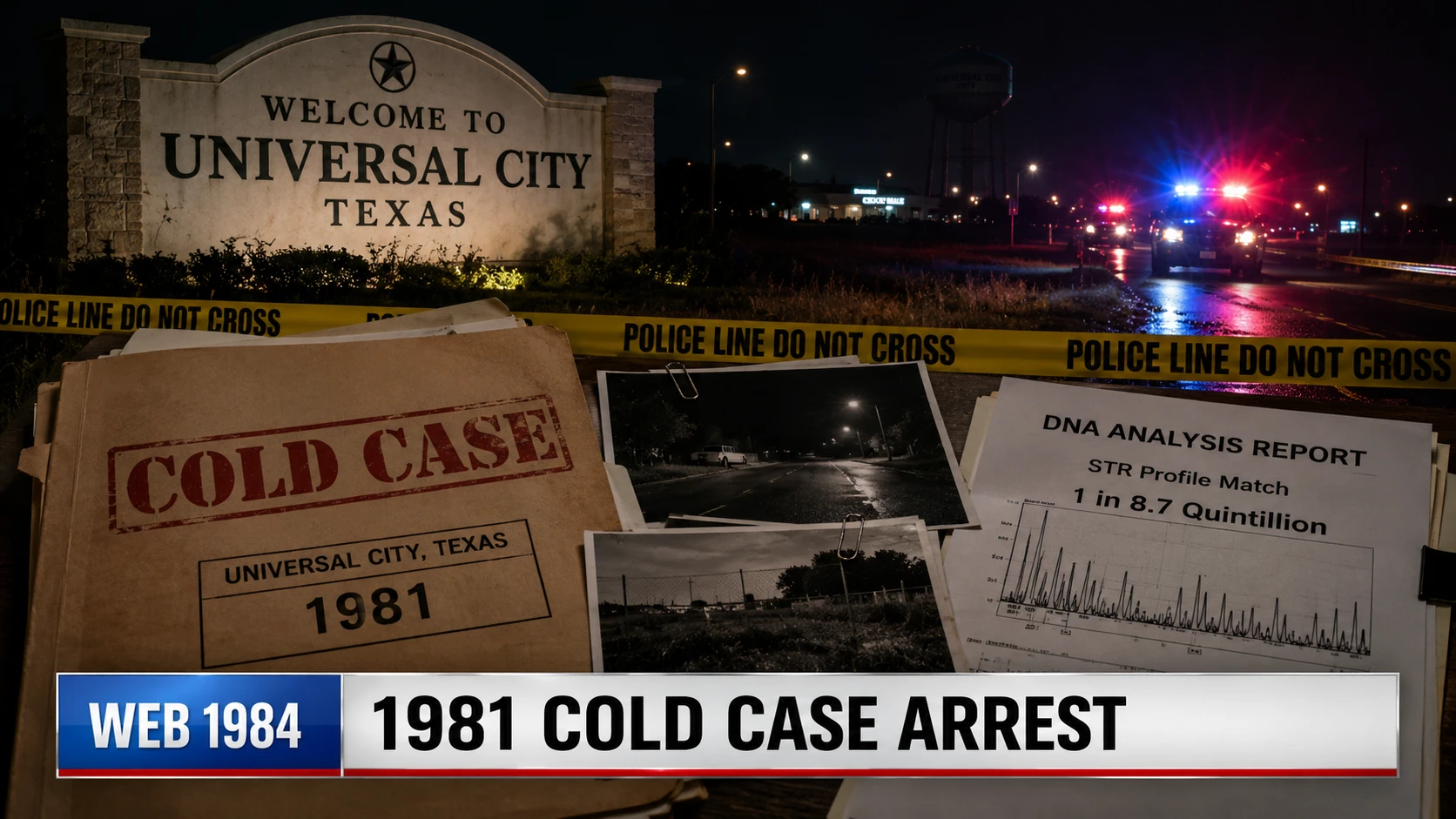
Her body was found two days later.
Investigators preserved evidence.
Detectives continued reviewing leads.
Potential suspects were tested and eliminated.
The Texas Rangers became involved.
The case remained publicly listed as investigators continued searching for the person responsible.
Now, for the first time in more than four decades, police say they have identified and charged a suspect.
Arrest Begins a New Chapter — Not the End of the Case
The arrest represents a major investigative milestone, but the criminal case is only beginning.
Because Brower was arrested in Arizona on a Texas capital murder charge, additional court proceedings are expected as authorities move the prosecution forward.
Questions may also emerge regarding what connection, if any, investigators believe Brower had to Herrera, Johnny's Inn or Universal City in 1981.
Authorities have not yet publicly detailed a motive or fully explained the circumstances they believe led to Herrera's death.
Those unanswered questions could become important as prosecutors present evidence and Brower's defense attorneys challenge the state's case.
The DNA evidence is likely to receive particularly close attention. Prosecutors may eventually be required to establish how the original evidence was collected, stored and preserved during the decades between Herrera's death and modern testing.
A 45-Year Search for Answers
Few homicide investigations remain open for this length of time and ultimately reach the arrest stage.
Herrera was killed in April 1981.
Ronald Reagan was in the first months of his presidency. Personal computers had barely begun entering American homes. Modern DNA profiling had not yet become a law-enforcement tool.
More than four and a half decades later, the physical evidence from that era has become the foundation of what police describe as the breakthrough they had been waiting for.
The case also sends a broader message about unsolved homicides: the passage of time does not necessarily eliminate the possibility of identifying a suspect.
Investigators in Universal City continued working Herrera's case even when there appeared to be no immediate path toward an arrest.
In 2018, police publicly said they had DNA and believed that finding the right person could ultimately produce a match.
Eight years later, authorities say that match has happened.
Kelly Lee Brower Sr. now faces a capital murder charge in connection with Yolanda Herrera's 1981 death.
For the investigators who spent decades searching for answers — and for those who remembered Herrera — the arrest represents something that once may have appeared increasingly unlikely:
A 45-year-old homicide case is moving out of the cold-case files and toward a courtroom.
WEB 1984 will continue following the case as additional court records, forensic details and information about the prosecution become available.





Be the first person to comment.