
I am a proud American, and I believe words placed in the Constitution should mean something.
Not sometimes. Not only when government finds them convenient. And not only when courts have already developed hundreds of years of precedent around them.
They should mean something because they were written there deliberately.
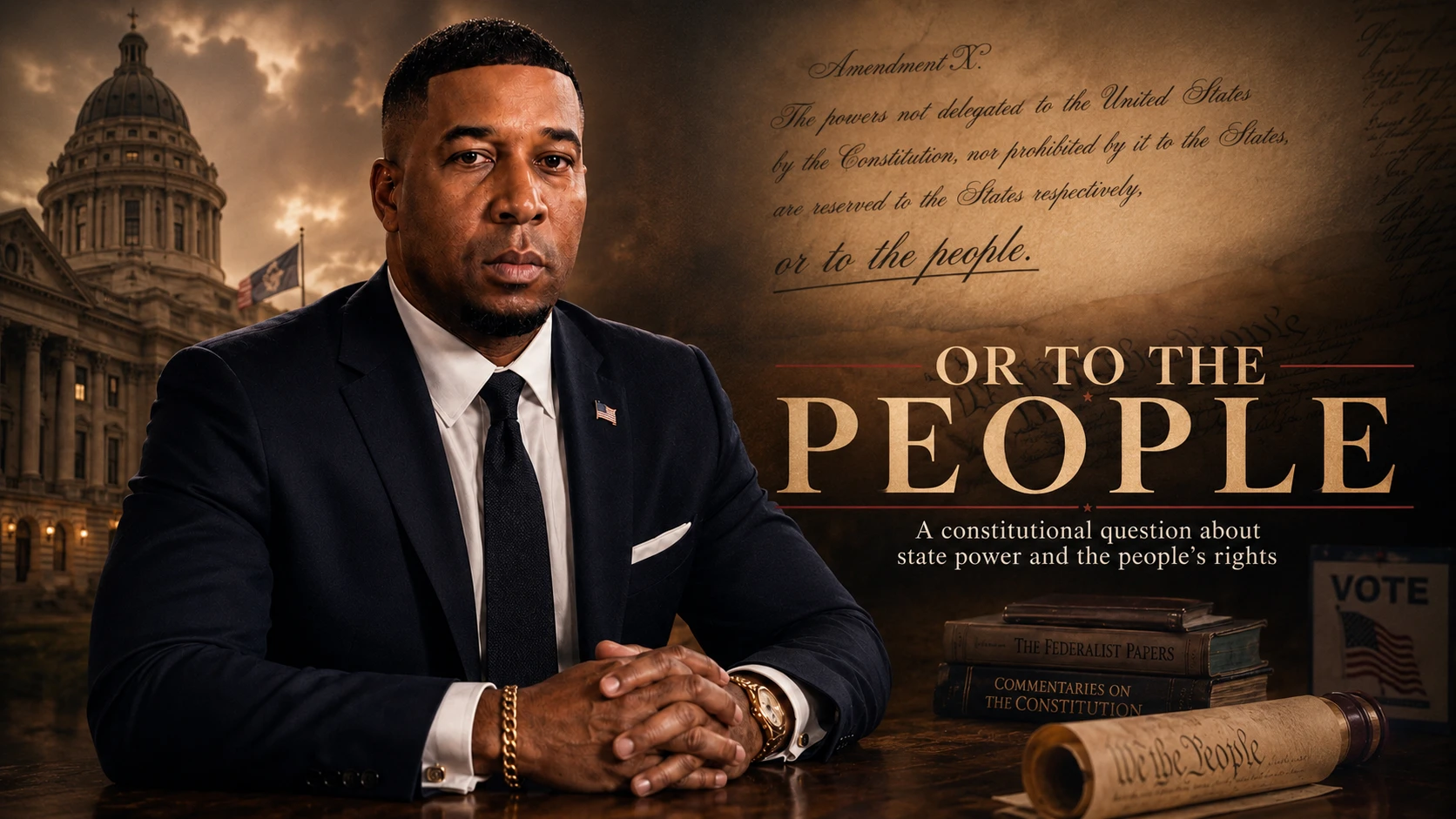
That is why I keep returning to one short phrase in the Tenth Amendment: “or to the people.”
The full amendment says:
“The powers not delegated to the United States by the Constitution, nor prohibited by it to the States, are reserved to the States respectively, or to the people.”
American constitutional law has developed an extensive body of doctrine concerning federal power and state sovereignty under the Tenth Amendment. Congress's own Constitution Annotated describes modern Tenth Amendment doctrine primarily in terms of federalism and the relationship between federal and state authority.
I understand that.
I also understand that the courts today do not interpret “or to the people” the way I am proposing in this article.
I am not pretending that my interpretation is already settled law.
I am asking whether we have settled too quickly for an interpretation that gives tremendous practical meaning to “the States” while failing to ask whether the Constitution intended independent significance for the other words in that sentence: “the people.”
The state is an institution. The people are the source.
Government is an entity. A state government has offices, employees, prosecutors, judges, police departments, prisons, agencies, budgets and the power to enforce laws.
But where did legitimate government authority begin?
It did not begin with a courthouse.
It did not begin with a governor.
It did not begin with a legislature.
American political theory begins with the people.
The Declaration of Independence expressed the revolutionary principle that governments derive their just powers from the consent of the governed. That principle is fundamental to how I understand America.
If government receives authority from the people, then I believe we should be willing to ask a difficult question:
How did the governmental institution become practically more powerful than the people who created it?
I understand why government needs authority to protect one person from another. If somebody attacks another human being, threatens another person's life, steals from someone, or commits some other genuine injury, society needs institutions capable of intervening.
But I question how far that principle should extend.
When government regulates conduct that does not involve one person harming another, detains citizens, prosecutes them, taxes their property, or otherwise exercises coercive authority, I believe Americans should be able to ask whether that power has exceeded its proper constitutional boundaries.
Why must the people wait until after the injury?
Federal courts generally require a person bringing a case to establish standing. Under the Supreme Court's familiar test, the plaintiff ordinarily must show a concrete and particularized injury, causation, and that a favorable court ruling is likely to redress that injury.
I understand the reason courts give for this doctrine. Federal courts decide actual cases and controversies rather than abstract political disagreements.
But I believe there is a serious democratic question hiding underneath that rule.
Why should citizens necessarily have to wait until government has injured somebody before asking whether government possesses the constitutional authority to do something in the first place?
Why should the people who supposedly created government have fewer opportunities to question government power than the government has opportunities to exercise that power?
I believe constitutional government deserves a mechanism through which the people can challenge governmental power before the damage becomes irreversible.
My proposal: a People's Government alongside state government
I am proposing something that current American government does not have.
I believe every state should have a People's Government operating alongside the existing state government.
This would not replace the United States Constitution.
It would not have authority to override federal constitutional rights.
It would not be superior to the Constitution of the United States.
The federal Constitution would remain the supreme constitutional boundary.
But within matters properly belonging to state government, I believe the people themselves should possess an independent governing institution.
The existing state government could remain.
There could still be a governor, agencies, courts and state officials.
But there would also be a Governor of the People, People's Courts, independently elected People's officials, financial auditors and institutions accountable directly to the citizens.
And ultimately, on state-law questions, the people would have the final word.
Two judges where liberty is at stake
One of the biggest changes I would consider involves criminal courts.
Today the government prosecutes a defendant before a judge operating within the existing judicial system.
My proposal would create two independent judicial authorities in appropriate state proceedings: one from the established state judicial system and one elected from the People's Government.
Where the government seeks to deprive an American of liberty, I do not believe one governmental structure should hold every institutional advantage.
The People's Judge would constitute an independent constitutional check.
Under the system I envision, major decisions involving detention, conviction and punishment would require participation from both constitutional sides.
The point is not to make prosecution impossible.
The point is to make the deprivation of liberty require more than the judgment of institutions belonging entirely to the same governmental structure.
A jury should belong to the people
I would also reconsider how juries are structured.
The jury is already one of the strongest democratic institutions in American law because ordinary citizens, rather than government officials alone, determine guilt.
My proposal would strengthen that concept.
I envision a jury system deliberately structured to guarantee genuine representation of the people's independent role rather than treating citizens merely as temporary participants in a government-operated proceeding.
The details would require substantial constitutional study and debate. But the principle is straightforward:
When the government attempts to take someone's liberty, the people's independent voice should be impossible to exclude.
Judges of the people must be independent
People's Judges would be elected.
They could not simultaneously work for local, state or federal government or hold government contracts. Candidates would be required to demonstrate substantial knowledge of the U.S. Constitution and the constitution governing the People's Government.
I would not automatically require every candidate to come from the traditional political or judicial establishment.
In fact, part of the purpose is to create independence from that establishment.
This proposal would need careful refinement. Some restrictions I have discussed—for example, restrictions involving receipt of government benefits—would raise legitimate questions about fairness and constitutional equality. Those issues should be debated openly rather than hidden.
The goal is not to exclude Americans casually.
The goal is institutional independence.
The People's Governor
The People's Government would elect its own governor on an election date separate from the existing state gubernatorial election.
The two governors would serve comparable terms, but they would derive their authority from separate electoral processes.
The Governor of the People would have limited appointment power.
That governor could select immediate office staff and cabinet personnel, but major public offices would not simply be filled through gubernatorial appointment.
Judges, treasurers, auditors, attorneys general, department leadership and other major offices would be elected directly.
I do not want to replace one concentration of political power with another.
Every state law should receive the people's vote
The most important feature of my proposal is direct democracy.
I do not believe legislators should possess the final authority to make state laws in the people's name without the people having the final vote.
Under my model, proposed state laws would be presented to voters on a regular schedule.
I propose the first Monday of every month as the state's lawmaking ballot day.
The existing state government could introduce legislation.
People's Government officials could introduce proposals.
And individual citizens could submit proposed measures through an established public process.
But ultimately, the people vote.
Every eligible voter would be required to participate in the process, while remaining completely free to select:
Yes. No. Or Abstain.
There would be no fine for choosing not to take a substantive position.
The purpose is participation, not forced agreement.
If Yes receives more votes than No, the measure passes.
If No receives more votes, it fails.
Those formally abstaining have still participated but do not overturn the decision of those choosing between the competing positions.
Constitutional screening comes first
Direct democracy does not mean disregarding the Constitution.
Before a proposed law reaches the ballot, qualified constitutional reviewers on the People's side would determine whether the proposal falls within state authority and whether it conflicts with the United States Constitution.
If it violates the federal Constitution, it does not go forward.
A written explanation would be required.
If it merely duplicates a matter voters recently decided, it could also be temporarily rejected, again with a written explanation. I would allow substantially the same issue to return in a later year so one election does not permanently prevent future generations of voters from reconsidering policy.
A person who believes a proposal was improperly rejected could appeal through the People's Government, including to the Governor of the People's office under procedures established by that government.
The people should control state government—not merely select it
There is a profound difference between electing representatives and exercising sovereignty.
We constantly say that America is government of the people, by the people, for the people.
If we mean it, I believe we should consider whether voting every two or four years is enough.
Under my model, elected officials administer government.
The people make state law.
Government officials can recommend.
They can research.
They can propose.
They can explain.
They can administer.
But when the ultimate question is, “What shall the law of this state be?” my answer is:
Ask the people.
Money must also be accountable to the people
A People's Government capable of operating courts, conducting audits and administering programs would require funding.
I have proposed reconsidering the current structure of property taxation and other state-level revenue systems.
My broader principle is that if citizens are financing public government, an independently constituted People's Government should not be expected to survive entirely at the financial pleasure of the existing state government.
Otherwise, the institution it is supposed to check could simply control its funding.
I would therefore explore dividing appropriate state and local revenue between the conventional governmental structure and the People's Government.
That money would not belong to a governor or financial administrator personally.
It would belong to the public institution.
The People's Government would have elected auditors, budgeting officials and financial oversight.
A financial administrator would merely safeguard funds, maintain records and issue payments already lawfully authorized.
That person would have no unilateral authority to decide what gets built or where public money gets spent.
I have suggested that candidates for this custodial position could be nominated at the federal level—for example, through a presidential slate—but that the people themselves would make the final selection through an election.
No corporate money controlling the People's Government
Candidates seeking office within the People's Government should be accountable to human beings, not corporations.
Under my proposal, political donations to candidates for these offices would come only from individual citizens.
No corporate contributions.
No PAC money.
No government-contractor money.
If an institution exists specifically to represent the people's independent power, allowing organized financial interests to purchase disproportionate influence would defeat its purpose.
Why concerns about prisons deserve scrutiny
I also believe Americans have legitimate reasons to scrutinize financial incentives within the criminal justice system.
That does not mean every judge, prosecutor or state government is corrupt, and I do not claim that states generally receive a bounty for simply sending another person to prison.
But there have been documented situations that demonstrate why financial incentives deserve public examination.
A Justice Department criminal-justice resource summarizes research finding that numerous private-prison contracts contained minimum-occupancy or payment-guarantee provisions. In the set of contracts examined in that report, 65% contained some form of occupancy guarantee, with requirements ranging from 80% to 100%.
That does not prove that judges sentenced individual defendants because of those contracts.
It does demonstrate why citizens are justified in demanding transparency whenever incarceration and financial interests intersect.
The principle should be simple:
Nobody should financially benefit from depriving Americans of liberty in a way that creates incentives for unnecessary incarceration.
This is not current constitutional doctrine
I want to emphasize this because serious constitutional debate requires intellectual honesty.

The Supreme Court has not interpreted the words “or to the people” as creating the parallel governmental system I have described.
Modern Tenth Amendment doctrine has predominantly addressed the allocation of authority between the federal government and the states.
What I am presenting is an argument about constitutional structure and democratic reform.
Some parts could potentially require state constitutional amendments.
Other parts could implicate the U.S. Constitution and therefore require much more substantial constitutional change.
Still others could prove inconsistent with existing federal constitutional protections.
Those questions should be studied by constitutional scholars, attorneys, judges, historians and, most importantly, the American people.
I am not afraid of those objections.
I want the debate.
What does “or to the people” mean?
That brings me back to where I started.
The Tenth Amendment could have ended with the words “reserved to the States respectively.”
It does not.
It continues:
“or to the people.”
I believe those words deserve renewed national attention.
Perhaps constitutional scholars will strongly disagree with my interpretation.
Perhaps courts will reject it.
Perhaps parts of the governmental structure I envision would ultimately have to be modified substantially.
But disagreement is not a reason to stop asking the question.
America was built through arguments about sovereignty, representation, liberty and governmental power.
Those arguments should not end merely because generations have grown accustomed to the institutions we inherited.
I have never knowingly surrendered my fundamental rights to a state government simply because I live within its borders.
And when I read a Constitution that speaks not only about states but about the people, I believe Americans have every right to ask what independent constitutional meaning those words still possess.
I am not calling for rejection of the United States Constitution.
I am calling for renewed loyalty to it.
I am not calling for government without law.
I am calling for law with greater democratic legitimacy.
And I am not saying that every answer I have proposed here is already constitutionally correct.
I am saying that the question is too important to ignore.
If America truly belongs to the people, then the people should not merely celebrate their sovereignty once a year.
They should exercise it.
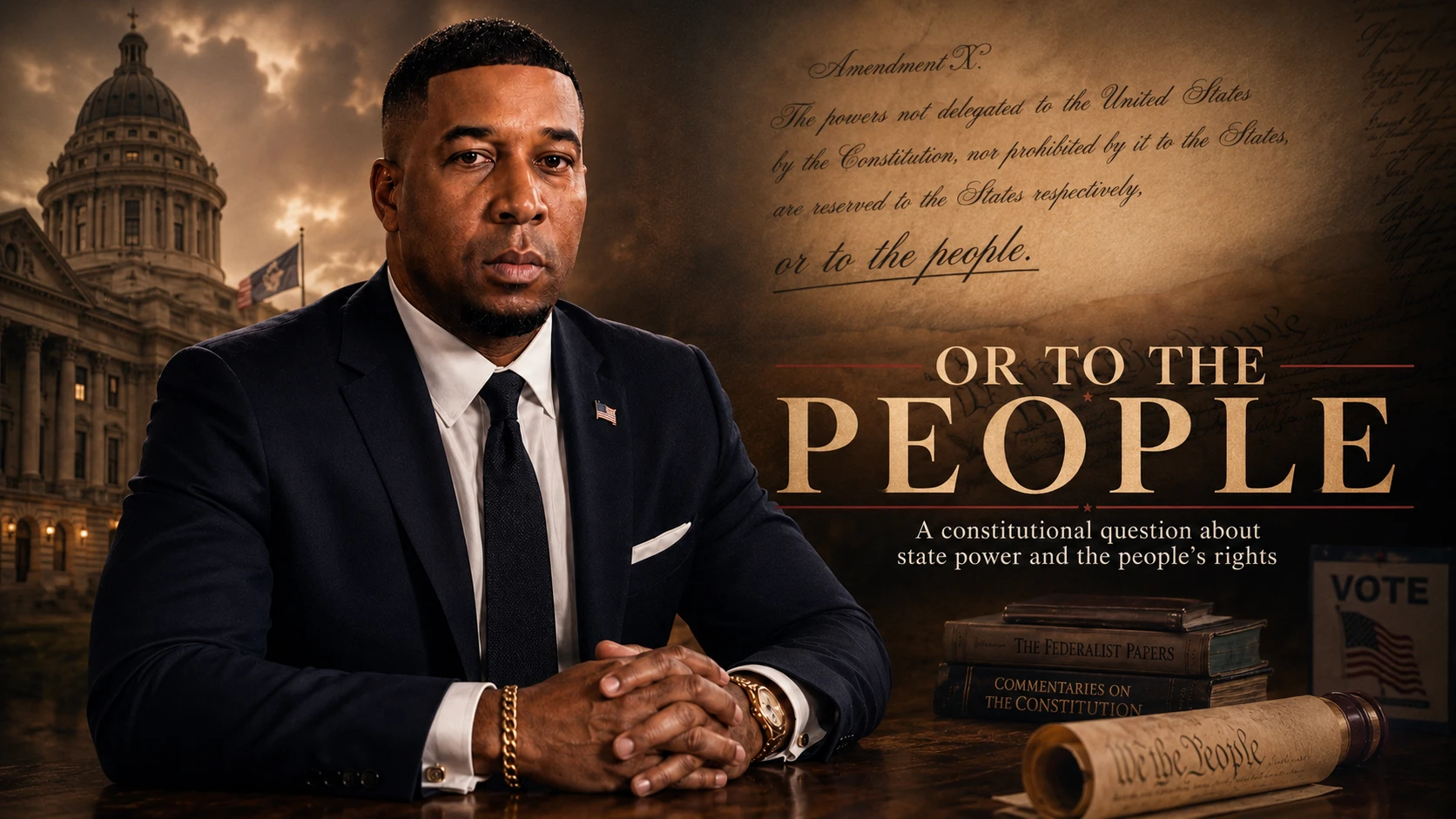
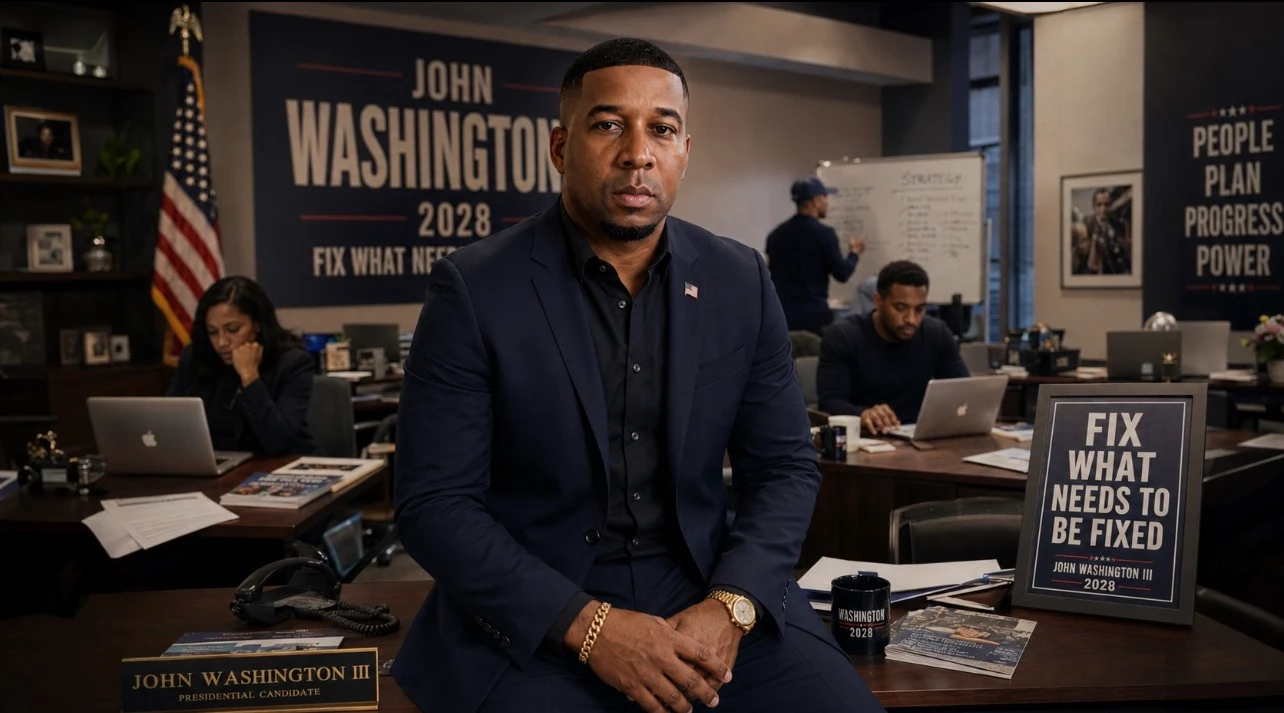
John Washington III 2028 Candidate for President of the United States




Be the first person to comment.